Late Summer/Fall 2021

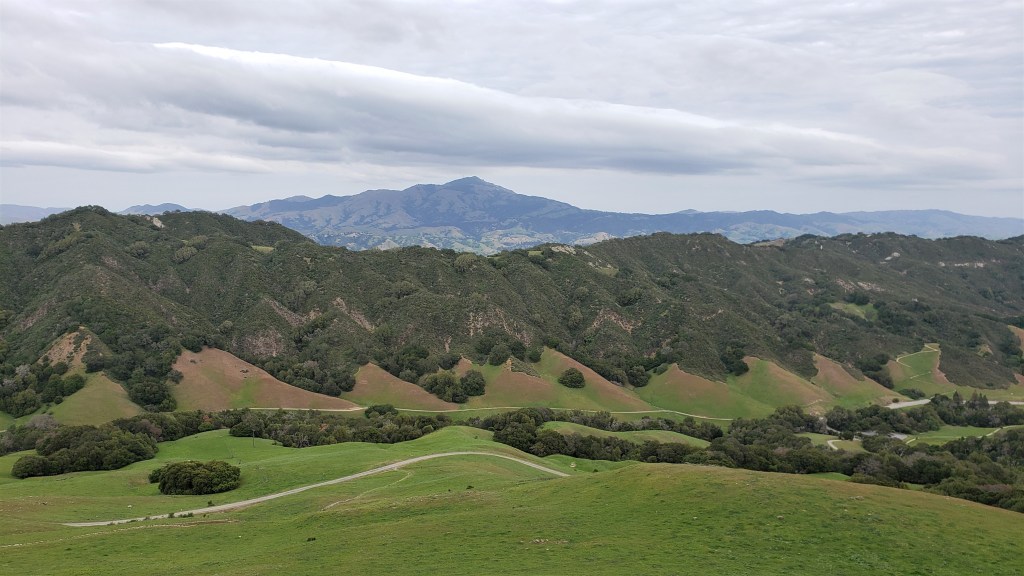
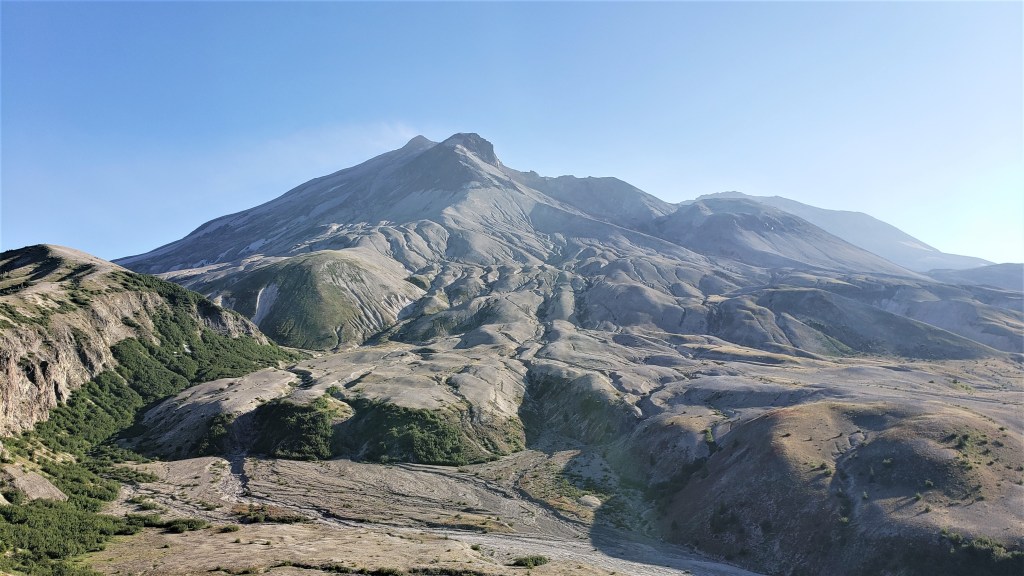
Castle Peak in less smoky days

It turns out I am not good at maintaining a race blog. In my defense, I didn’t have much to report in the second half of 2021. It’s a cliché to say that races are a metaphor for life, but honestly, my 2021 race season felt a lot like the year as a whole. My early-summer races (Black Hills, Bigfoot), like the illusory end of Covid, promised a great year ahead. Then came the delta wave, the Afghanistan withdrawal, the West Coast’s now-annual fire nightmare, supply-chain woes and inflation, the Democrats’ never-ending (until they ended in failure) negotiations over Build Back Better, the omicron wave… Yeah. Admittedly, most of this had nothing to do with running, but the wildfires did: they led me to skip one event (Desolate Peaks), cast a pall over another (Castle Peak), forced the cancellation of my fall goal race (Ultra Trails Lake Tahoe), and generally made running unpleasant for a while. Between the smoke, cancelled races, and a busy fall at work, I kind of gave up on running. So, 2021 in a nutshell: promising start, disappointing end.

That’s not to say late summer and fall were a total loss. In lieu of real training, I signed up for a lot of small, local races in the hope that the occasional hard effort would keep me in shape. Those races turned out to be a lot of fun: it’s nice not to worry about travel, lodging, or your performance. In the end, I found–much like Candide–that things were not so bad, even if we don’t live in the best of all possible worlds. At least, that’s how I felt about the running: don’t get me started on the other stuff.

Castle Peak 100k (August 14)

I’ve always liked Castle Peak. It’s beautiful, set in the mountains above Truckee and Donner Lake. It’s tough, with some gnarly technical parts and lots of elevation gain. It’s local, which means I can get there easily and usually have friends in the race. It’s well-organized and has a fun vibe. I had a blast at this race in 2018 and 2019 and expected the same this year. However, things did not go so well.

As the race approached, it wasn’t clear whether it would even happen. The wildfires were bad this year–they’re bad every year these days–and the RD said he’d cancel the race if the AQI was above 150. (For those who don’t obsessively watch the AQI for 3-4 months every year, 150 is the threshold between “unhealthy for sensitive groups” and “unhealthy.”) This seemed reasonable, and I was glad there was a clear rule (which is not always the case). However, the prospect of cancellation–and the alternative of running in not-necessarily-dangerous-but-still-unpleasantly-smoky air–made it hard for me to get that excited.

I felt even less excited on race morning. On the plus side, the race went ahead, as the AQI hovered right around 150. On the minus side, I didn’t sleep at all the night before. As a night owl, I often have trouble falling asleep in time to…well, sleep before a 3:00am alarm. This time, I took an unusually high dose of edible cannabis to make me drowsy, but to no avail. So, I arrived at the start feeling both exhausted and very stoned. I nonetheless chugged along half-awake for some hours, running the familiar course on autopilot, and taking cheer every time I saw Megan and Dan at the aid stations.

It got hot: mid-90s. The smoke got worse, with the AQI around 170 most of the day. The ridgeline from Basin Peak to Castle Peak, which usually offers spectacular views, didn’t offer much today but smoke. I kept running, not well but sustainably. Then, as I approached the Soda Springs aid station at mile 47, it occurred to me that I could drop. I was only a few miles from the start/finish where I’d parked my car, so this would be my last chance. If I kept going, I’d be committed to doing another mountainous 18 miles. I didn’t see the point. I’d done this race twice before, so I didn’t feel I had anything to prove. I’d seen those last miles in much nicer conditions. It was hot and smoky, and I felt as crappy as the air looked. Sleep deprivation, heat, smoke: I probably could have handled any two, but not all three. I saw Megan at the aid station and told her my thoughts. She encouraged me to continue, saying we could all run together. I replied “It’s not gonna be fun.” And with that, I watched Megan and her pacer disappear up the hill.

A spectator who overheard our conversation offered me a ride back to the start/finish, which I gratefully accepted. I grabbed my car and drove back to Chris and Tim’s cabin, where they graciously let us stay. I took a shower and lay down for a while, feeling ok about my decision. Then I drove back to the finish to wait for Megan and Dan to come in.

While waiting, I felt my first pangs of regret. It’s tough to hang out at a race finish after you’ve DNF-ed. The RD, Peter Fain, asked me what happened, as did Let’s Wander photographer Jesse Ellis. They were both nice and understanding, but it was hard not to feel some shame. The ultra ethos tells us to tough things out, and celebrates all runners who finish, no matter how slow. Sitting around at the finish showered and clean while Megan and Dan were still out there didn’t sit well with me. When I saw them come in, hours later and in the dark, I couldn’t help wishing I’d been with them.

It wasn’t a great day, but at least I learned why people hate to DNF. I’ve DNF-ed before and felt comfortable with my decision, but in every case I’d dropped because of an injury that left me no choice. This was my first “voluntary” DNF–the first time I’d dropped simply because I felt bad–and that felt bad. Lesson learned.

Double Dipsea (August 28)

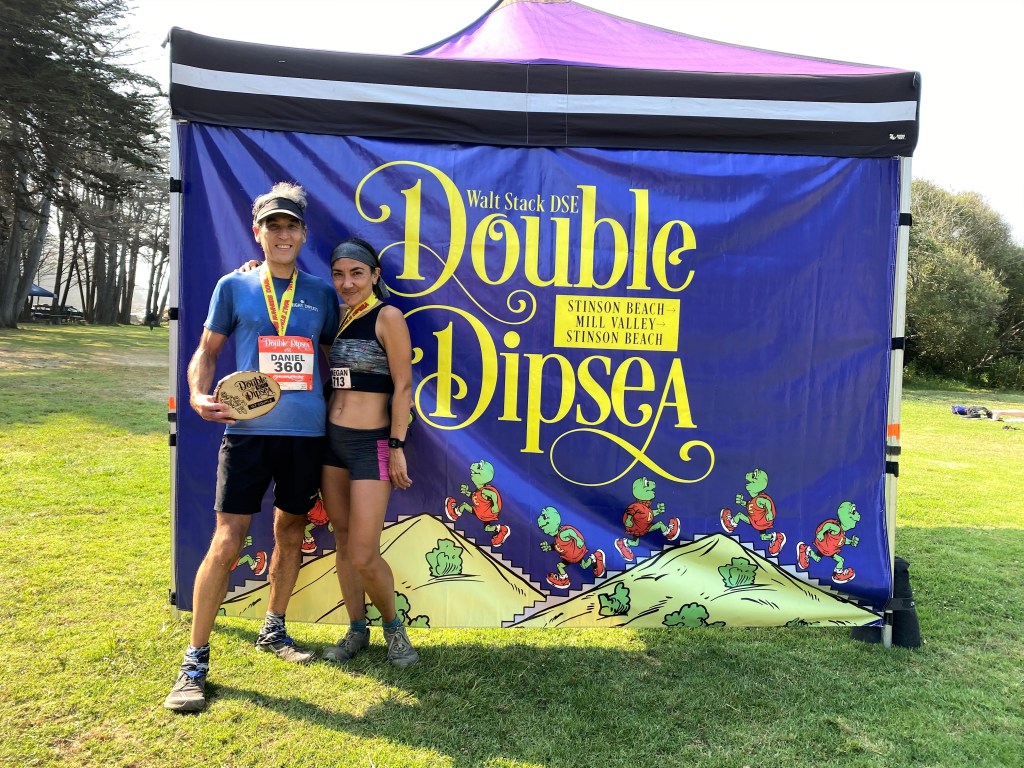
The Double Dipsea involves running Marin County’s seven-mile Dipsea Trail twice, from Stinson Beach to Mill Valley and back again. This takes you through open coastal headlands, redwood forests, and up and down a lot of stairs. Like its forebear, the Dipsea Race, the DD is handicapped: runners get head starts based on their age and gender. As a male aged 50-54, I get a 14-minute head start. In 2019, that was enough to win the race with an actual running time of 2:06. I doubted I’d repeat that feat this year: although I’d run some decent mileage over the summer, I hadn’t attempted anything short and fast in some time. On the other hand, I did break a rib in 2019, when I collided head-on with another runner eight miles in. Perhaps I could squeak out a decent performance again if I avoided broken bones.

This race is usually in June, but Covid concerns pushed it to late August this year. This had a couple of consequences: it was hotter than usual, and also smoky, as fire season was well underway. This didn’t advantage or disadvantage anyone in particular, but I expected the finishing times to be slow.

Things felt pretty good for the first two miles, up the coastal stretch and the Steep Ravine steps. However, as soon as I crested those steps, I felt a blast of warm air. Seriously, the temperature probably rose 15 degrees in just a quarter-mile as we moved inland. It remained hot, dry and a bit smoky for the rest of the race.

I passed Megan, who started five minutes ahead of me, shortly before reaching the Dipsea Steps. I reached the Mill Valley turnaround in 1:04, three minutes slower than the previous year. I briefly hoped that the slower pace would allow me to run the second half faster, but I quickly abandoned that hope when I started back up the steps. My legs felt tired: maybe some lingering fatigue from Castle Peak two weeks earlier, or maybe just out of shape. I slogged through the second half in 1:11 to finish in 2:15, almost ten minutes slower than my previous time. Good enough for fourth overall.

As expected, this year’s times were slow. The fastest actual running time of 2:10 would have been the 18th fastest time in 2019. This partly reflected a weak field, but I suspect the heat also played a role. I’ll ascribe three minutes of my slowdown to the heat, with the other seven minutes due to poor training (and two extra years on my legs).

Megan finished shortly behind me in fifth place. She slowed down this year as well, though not as much as me. No matter: we once again nabbed the couples trophy and then went for a swim in the Pacific–one perk of doing the race in August rather than June.

Berkeley Trail Adventure 50k (September 17)

This race, in Tilden and Wildcat regional parks, is right in my backyard. I’ve volunteered there twice but had never run it, mostly because I run these trails all the time. But since I’d barely been running since my aborted attempt at Castle Peak, I figured this was a convenient way to get in a solid long run. And I do mean convenient: an 8:00am start only 20 minutes from my home! Really, I don’t know why I hadn’t done it before.

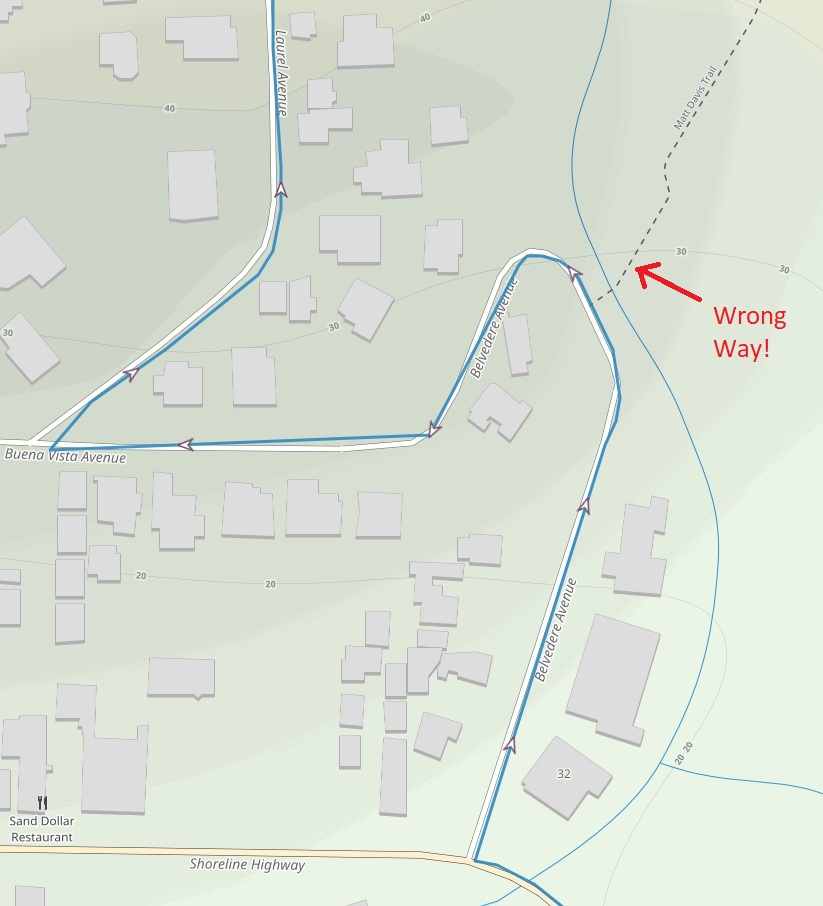
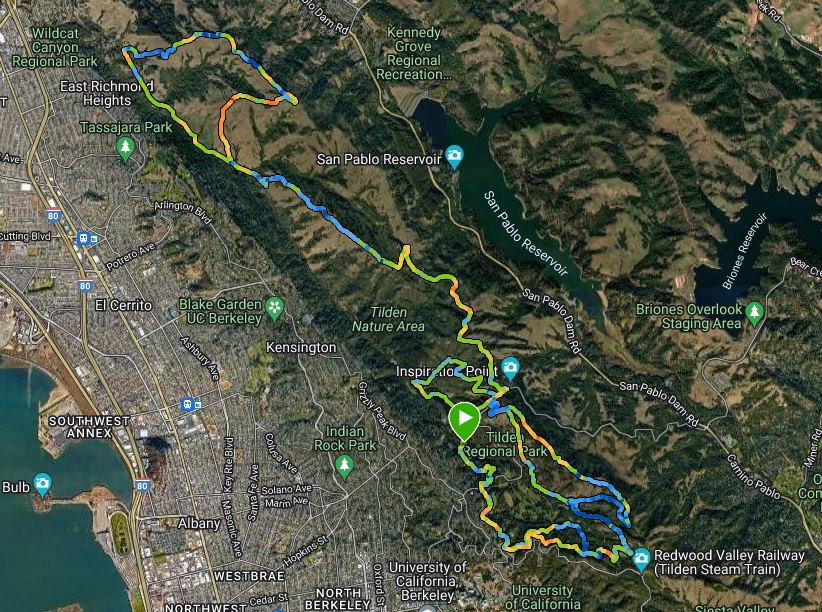
The course is pretty straightforward: a loop around Tilden, then a loop around Wildcat, then another loop around Tilden in the opposite direction. Nonetheless, everyone managed to go off course because someone had come out in the middle of the night and sabotaged the course markings. Whereas the yellow ribbons should have led runners straight down Seaview, someone had moved them all so they first took runners along the unnamed single-track that parallels Seaview and then down Upper Big Springs. Why do people do this? Your guess is as good as mine.

Due to my usual slow start, I was well back in the pack when we hit the course sabotage. Having looked at the course map beforehand, I was pretty sure we should just continue down Seaview. But everyone else was taking the single-track, and the ribbons were there, so I followed along sheep-like. Fortunately, I asserted myself when we reached Upper Big Springs, and told anyone who would listen that that was the wrong way. The runners around me followed my lead, but I later learned that many had run all the way down to the Arroyo aid station, where they were then told to go back up.

That was maybe the most noteworthy part of the race. Otherwise, it was just cruising along on familiar trails. I had no idea what place I was in until I caught the lead runner around mile 18. We ran together until we reached the Nimitz Way bike path, at which point I slowly pulled away. I ended up finishing first in 4:52, about five minutes ahead of the guy I’d passed. It was nice to win, but my time was objectively slow. That’s fine: my only real goal was to get in a good long run, and BTA was perfect for that.

IPA 10k (September 25)

The IPA 10k had not been on my radar–10k’s in general are not–but Megan and I noticed it while biking through Sebastopol. We’d been picking wild blackberries along the Joe Rodota bike path and decided to stop at The Barlow, an outdoor market in Sebastopol, for food and cider. While there, we noticed a flyer for the IPA 10k and beer mile. It looked like fun: the 10k was followed by a beer festival and a beer mile that promised world-class competitors (yes, there are world-class beer milers). We’d been hoping to add more short, fast races to our training schedule, so we signed up.

The race itself was not that memorable–I mean, it’s a 10k on city streets–but it was true to its spirit throughout. When we entered the starting chute at 8:00am, we found it lined with cups of beer and cider for the runners. We all took a celebratory shot and were off. I expected to be slow, and I was (37:41). That was fine: I was happy just to do something resembling speed work. Megan was more ambitious and hoped for a PR, but she suddenly felt sick only a quarter-mile from the finish and had to stop and puke. Not sure if the pre-race cider got to her or what, but that cost her the PR.

After finishing, we hung around the Barlow waiting for the main event. We grabbed breakfast with Megan’s friend Sophie, who happened to be in the area, then sampled some of the numerous beers on offer. At noon we headed back to the starting chute to watch the beer milers warm up. For those who aren’t familiar with beer miles, they require runners to chug a can of beer (no shotgunning or can-crushing allowed) before starting each quarter-mile lap. To be good, you have to be both a fast runner and a fast drinker: the best beer milers drain each can in less than ten seconds. (For comparison, my own drinking times range from 18 seconds on the first lap to over a minute on the fourth.) These guys were good: the winner, Phil Parrot-Migas of Canada, won the event in 5:45. That’s a far cry from the world record of 4:28, but in fairness, Phil had already run (and won) the 10k that morning in 30:59.

Would I do this again? Sure, why not? It’s a fun way to get in a good tempo run and try some new beers.

Diablo Summit Stomp 30k (October 23)

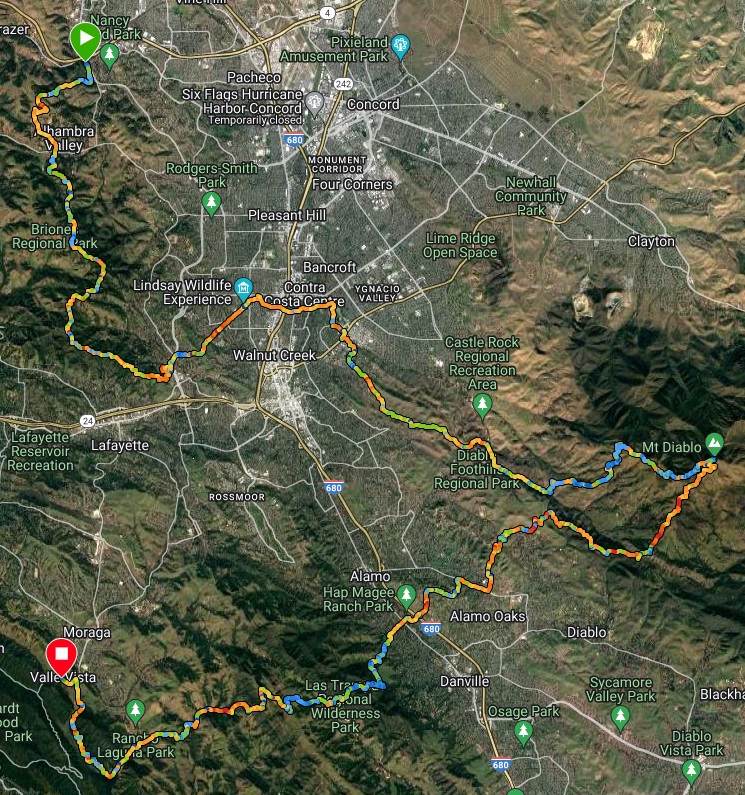
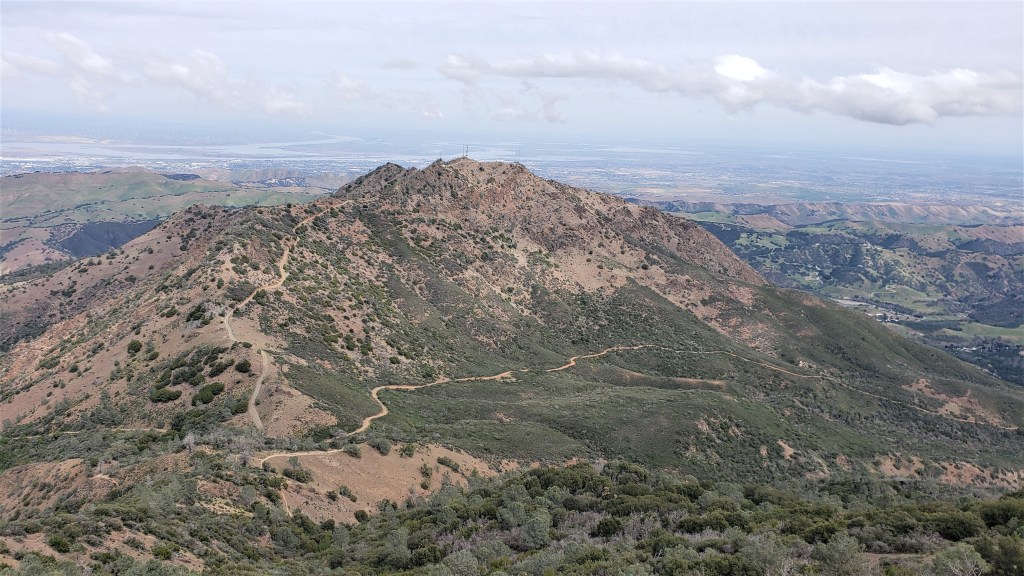
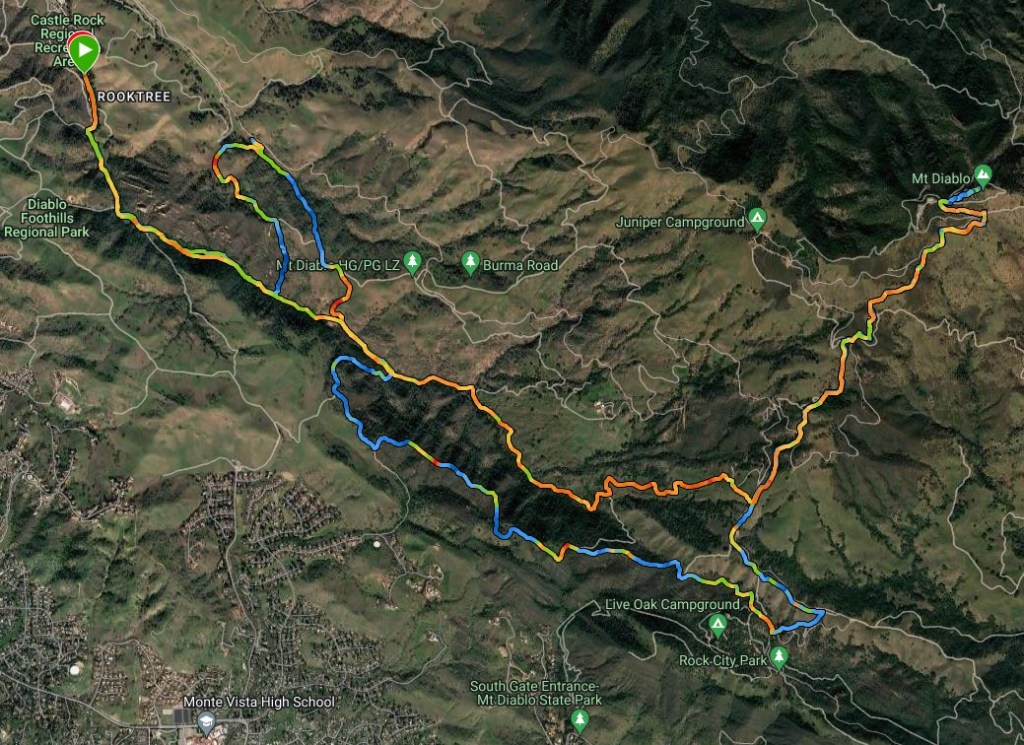
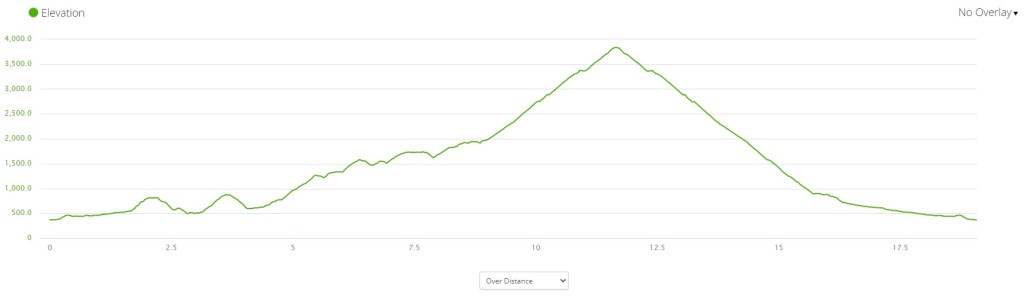
This is another local race I’d never bothered to try. I’m glad I did: it’s a great race. The 30k starts at Castle Rock regional park in Walnut Creek, then heads southeast to Mt Diablo via Rock City (a jumble of sandstone formations, not an actual city). From Rock City, it goes straight up the Summit Trail to Diablo summit, then comes straight back down. So, twelve miles of more or less continuous climbing followed by seven miles of fast downhill. Good for those of us who like to get our medicine out of the way.

I felt pretty good the whole way, leaving enough in the tank to bomb the downhill return. I was surprised when another runner passed me near the end of the downhill stretch: I typically pace more conservatively than most people, so I’m not used to being passed near the end. But, I hung with him on the flat finishing stretch and passed him with maybe a mile to go, finishing second. The race turned out to be surprisingly close–surprising because I hadn’t paid much attention to other runners–with the winner only a minute ahead of me and the third-place finisher only fifteen seconds behind. I was glad I’d been pushed over those last two miles, which I otherwise would have treated as an easy cruise.

This is a small, low-key race, but I’d highly recommend it to anyone looking for a good 30k. It’s pretty single-track all the way; the long climb is a great workout, and bombing straight down Diablo at race pace is about as fun as trail running gets.

The Dipsea Race (November 7)

I have lots to say about the Dipsea, but maybe some other time. It’s one of my favorite races, but this year’s race, like many pandemic-era events, felt a little off. Maybe it just felt weird doing it in November rather than June; maybe it was the unexpected course change; maybe the lack of an awards ceremony and the usual pomp and circumstance. Maybe I just wasn’t in the right head space because I didn’t train for this race as I usually do. Whatever the reason, this year felt less eventful than usual.

For those not familiar with the Dipsea, it’s a handicapped race in which runners get varying head starts depending on their age and gender. As a 52-year-old male, I got a seven-minute head start, up from six last year. My main goal was to get a black shirt by finishing in the top 35. I’d black-shirted the last three years in a row, going from 22nd to 19th to 15th. I figured gaining a minute would allow me to continue my streak and hopefully improve my place.

My race didn’t go badly, but I felt sluggish the whole way. I kept thinking “I really should go faster,” but I was either unwilling or unable to do so (not sure which). The only really noteworthy thing happened about a mile from the finish, where we would ordinarily bear right to take the third official shortcut that bypasses “the Moors.” This year race officials had blocked that way, so runners had to continue on the Dipsea all the way to Stinson Beach. I’m still not sure what happened there, but the course change made it hard to compare this year’s times to previous ones.

I ran my slowest time ever: 1:00:54. The missing shortcut probably accounted for 30-45 seconds, but my time was unusually slow even taking that into account. I did maintain my black shirt streak, barely, finishing 27th. I was happy about that, though less thrilled to drop 12 places even while gaining an extra minute head start. But, you get what you pay for: I didn’t train much this year, and it showed.

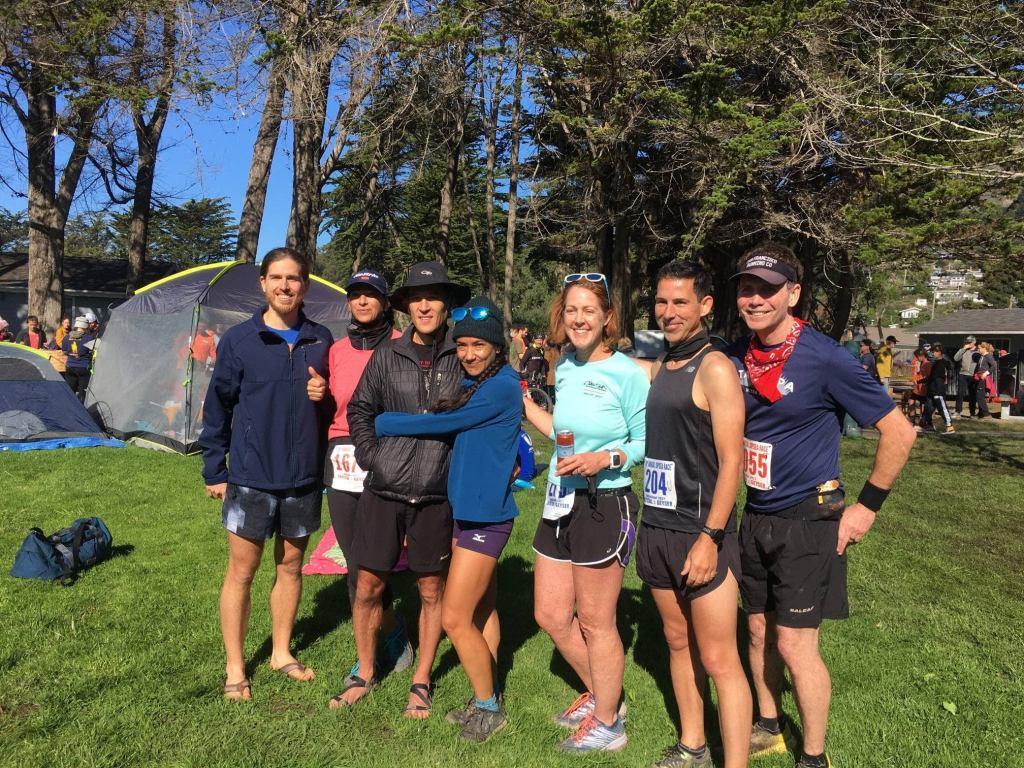
The after-party was more subdued than usual, as the race organizers canceled the usual awards ceremony out of an abundance of pandemic caution. However, it was a nice day to hang out with other runners, and the organizers did gather a few black shirts (those who hadn’t left already) for a post-race pic.

All told, an enjoyable day, but lacking the usual buzz. I look forward to a more normal year in 2022.

Mt Tam Trail Run 50k (November 13)

This race packs about as much scenic beauty and diversity into 50k as it’s possible to do. Starting and finishing at Stinson Beach, it takes you through the redwood forests of Steep Ravine and Muir Woods, the coastal headlands of Diaz Ridge and Coast View, and gives you a great downhill finish on the Dipsea. It’s just a great course. I’d only done it once before, in 2014, and I remember having a pretty bad race. I started out too fast and died hard in the second half, finishing in 4:49. I was in worse shape now than in 2014–not to mention seven years older–but I hoped that smarter pacing might still allow me to improve on that previous time.

I started slow, as usual, and generally felt fine, although my legs were a bit tired from doing the Dipsea six days earlier. I caught up to my friend Dan just past Cardiac and ran with him along the uber-cruisy TCC and down Bootjack. However, he was moving too fast for me up Ben Johnson and soon left me behind. I wouldn’t see him again until the out-and-back to Muir Beach, where he passed me on his way back. A short while later, I passed Megan on my own way back, just a few minutes behind.

I hadn’t been feeling great since Ben Johnson, which took a lot out of me. However, I got a second wind on my way up Heather Cutoff, a series of sharp switchbacks that takes you gradually up to Coast View. I’m not sure I was actually getting stronger, but I passed a lot of runners who seemed to be getting weaker, which gave me at least the illusion of running well. I was feeling pretty good by the time I got to Cardiac for the second time. I maintained a good pace along TCC and Troop 80, both of which are beautiful, runnable trails. Down Sierra and Camp Alice Eastwood, back up Ben Johnson to Cardiac, and then down the Dipsea for the final stretch.

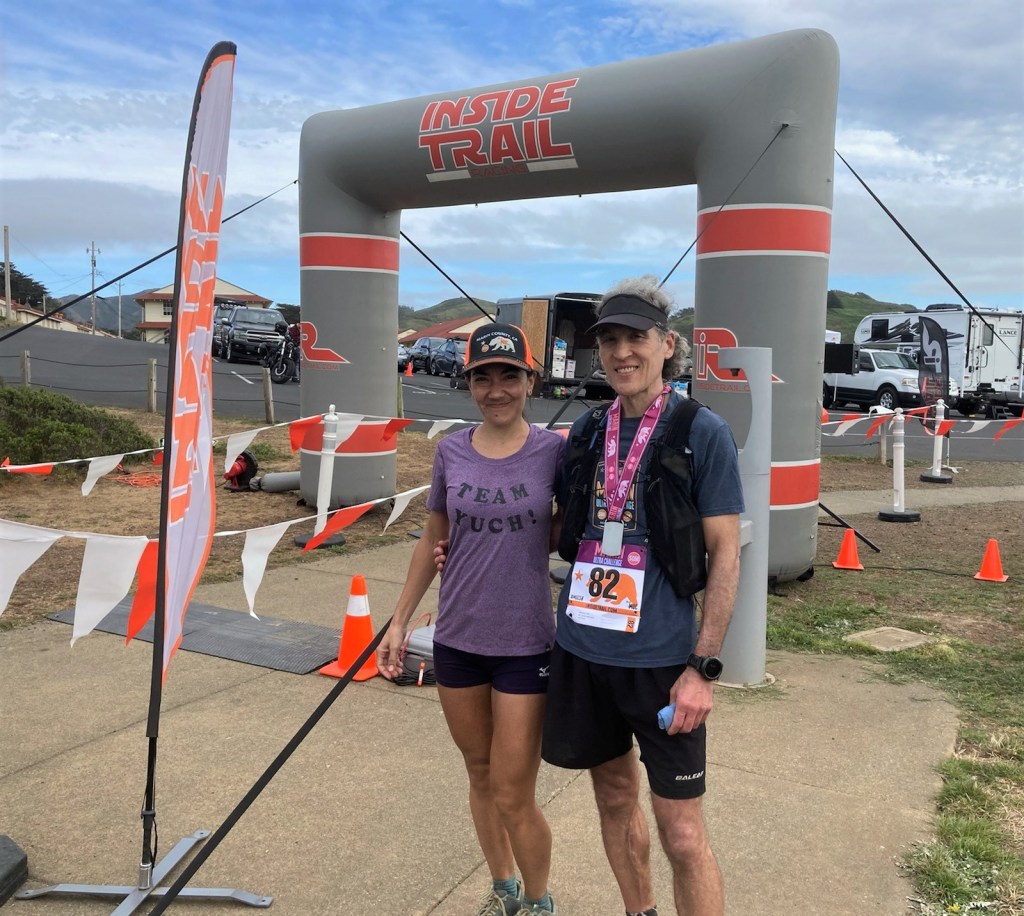
The last stretch of Dipsea has wide open views toward the coast, and I noticed another 50k runner walking an uphill stretch a few hundred yards ahead. He looked back and saw me as well, and started running. I caught him about 200 yards from the finish, but he turned on the speed and finished a few seconds ahead of me. Or so I thought until the chip times were revealed. Turns out he started well ahead of me, since I was tied up in porta-pottie lines and started at the back of the pack. So in the end, I finished 12 seconds ahead of him, in 5:00:44. Dan had finished 11 minutes earlier, and Megan crossed the line 17 minutes later. I didn’t manage to equal my previous time, but between my age and lack of training, I think I did about as well as I could.

After a quick rinse in the Pacific, we sat on the beach and ate Baja Fresh burritos–Inside Trail’s post-race standby these days–and drank a few beers. We talked about Dan’s upcoming move to Switzerland and discussed races we could all do there. A few days later, Dan and I had both signed up for the SwissPeaks 100k, and Megan later followed suit. I’ll take it as a positive sign that we all finished this race wanting to do…another race.

California International Marathon (December 5)

I’ve done CIM a bunch of times. Not sure exactly how many, but a lot. I like this race because it’s a fast course at a cool time of year that takes me through my old stomping grounds in Sacramento. I’ve PR-ed on this course several times, but I wasn’t expecting much this year. All things equal, I expected to be at least five minutes slower than my course PR of 2:48. All things were not equal, however: this would be my first time running CIM in the Nike Vaporfly, the shoe that returns so much energy that it prompted World Athletics to institute new running shoe regulations. Relative to my previous road shoe–the minimalist Altra One–I’d guess the Vaporfly buys me around five minutes. I ran a 2:47 at Napa in 2020 despite not being anywhere near PR shape (and Napa is a slower course than CIM). So, I figured I might “PR” at CIM this year even if I couldn’t PR.

My training leading up to the race was not encouraging. I’d done a few tempo runs and struggled to run even a few miles at my marathon pace. I also hadn’t done much mileage in months, relying on races for the occasional long run. Given that, I was pleased to find myself maintaining a respectable pace quite easily in the early miles. I hit the halfway point in 1:24 still feeling good, and I thought a “PR” was in reach, since I’ve always run negative splits on this course. Unfortunately, my lack of mileage began to show around mile 20, when I began to struggle. The last few miles were really hard: it’s been a long time since I felt this weak in a late-stage marathon, and I was steadily slowing down. I was relieved when I finally saw the capitol and Megan cheering me on near the end. I finished in 2:50–not a bad time, but after adding the Vaporfly minutes, probably seven minutes off my course PR. That’s ok. CIM will always be there, and I think I have at least one more PR in me. Or at least a “PR.”

Woodside Ramble 50k (December 18)

I have a soft spot for Woodside. I ran these trails–in Huddart and Wunderlich parks–frequently in college and always loved them. Huddart’s cavernous redwood forests are just as beautiful as Muir Woods, but much quieter and more peaceful. I did my first trail race (a half-marathon) in Woodside, so that’s where my trail adventures began. The Woodside 50k was the first race where both Megan and I placed first, which is a nice early-relationship memory. I imagine I’ll keep coming back as long as this race sticks around.

Before this year’s race, Megan noted that my previous two times on this course were 4:04:17 (2013) and 4:04:15 (2015). She asked jokingly if I expected to run 4:04 again this year. My short answer was probably not, as I wasn’t in that kind of shape, but who knows?

Me, now. My race was fine: I felt good throughout and enjoyed every mile. It was a beautiful, clear and cold day. Megan volunteered at the King’s Mountain aid station (miles 11 and 18), so I got to see her twice during the race. But my time of 4:35 was definitely not up to par. On the plus side, it felt pretty good not to kill myself, and to pass a bunch of people in the last five miles. So I wouldn’t have run it differently, even if I could have–which seems doubtful.

Because we’d arrived late in the morning (my fault, as usual), Megan had to take my car to her aid station. That was fine except that the car contained all my warm post-race clothes: a concern, since it was cold and windy, and Megan wouldn’t return for some time. I found a sheltered and sunny lawn behind the bathrooms, where I meditated for 30-40 minutes. With the wind blocked, the sun was intense enough to keep me warm until Megan returned. We got lunch in Palo Alto, met up with our friends Kate and Noel, and made a brief detour to Stanford’s main quad, which I hadn’t seen in ages. A perfect end to my racing year.

Bigfoot 73M – July 10, 2021

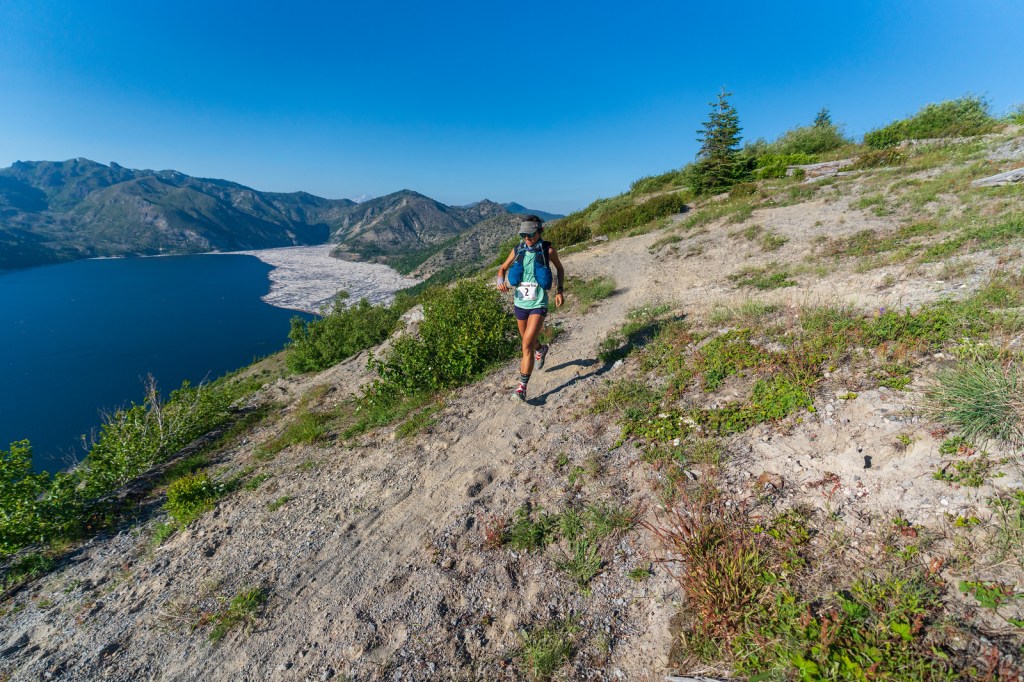
Photo by Riley Smith Photography

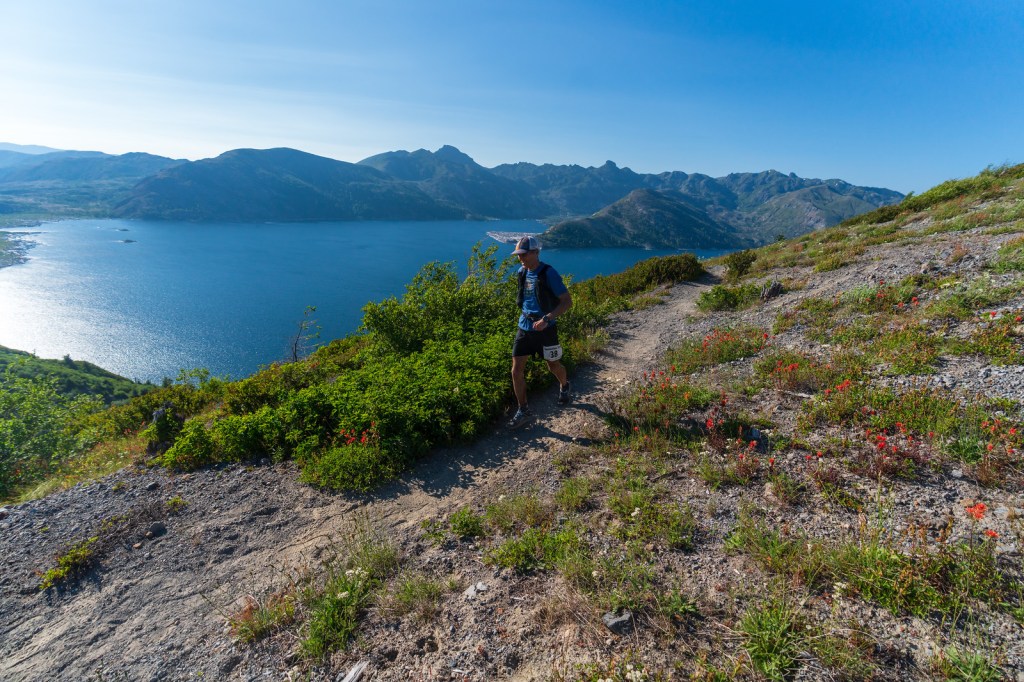
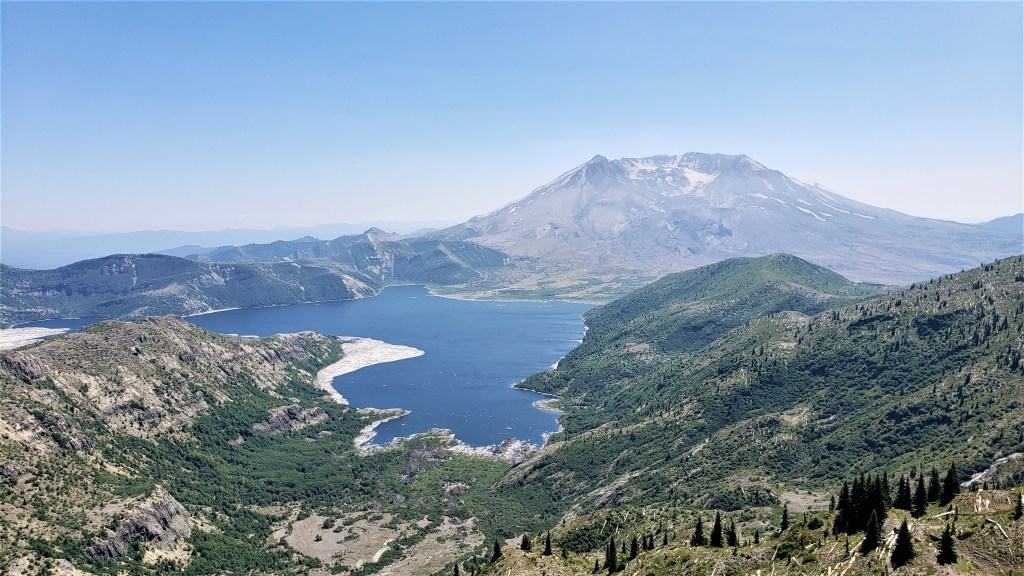
For those who don’t want to read a long race report, I’ll cut to the chase: Bigfoot 73 is the most beautiful race I’ve done. To be clear, many races have beautiful and memorable spots. Most also have a fair amount of “filler”: nondescript stretches where the miles drag on. What makes Bigfoot stand out is that almost every mile is amazing. It’s an almost uninterrupted feast for the eyes. I’ve done other races that have this quality, like the Ben Nevis Ultra. But Bigfoot also stands out for its diversity. It has a little bit of everything: boreal forests, desert landscapes, snow-covered peaks, mountain lakes, spectacular wildflowers, lava fields, and the constant, looming presence of Mount St. Helens. It’s a hard combination to beat.

My decision to do this race was kind of random and last-minute. I’d never heard of it before, although I knew of its better-known cousin, the Bigfoot 200M. I had originally planned to do the Vermont 100 on July 17. However, Vermont was cancelled for a second time due to Covid-19, so I began searching for a replacement. That’s when I found Bigfoot 73. The pictures of the course looked amazing, so I asked Megan if she’d be interested in doing it. When she said yes, that was that.

Although I was excited about the race, I was also a little apprehensive because I’d done the Black Hills 100M two weeks earlier. That race was hard on my legs, and I doubted my ability to recover in time. I did two easy 10-mile runs the week before Bigfoot, and neither was especially reassuring. My left foot was still a little sore–it hurt badly for the last 40 miles of Black Hills–and while it was fine on those recovery runs, small pains can become big in the course of a long race. More importantly, I just felt tired. Ten-mile runs shouldn’t feel hard, at least not with a 73-mile race three days away. I wasn’t worried about my race performance per se: this wasn’t a goal race, and I was fine with being slow. However, I did want to finish the damn thing and ideally see a lot of the course in daylight, since the views were kind of the point. I could only hope three more days of recovery would be enough.

We flew into Portland on Friday, picked up our rental car, and drove up to our Airbnb in Ariel. For us, the logistics were easy: about an hour to fly to Portland and another hour to drive to Ariel. We made ourselves a nice pre-race dinner of roasted vegetables and chickpeas, prepared our drop bags and other race gear, and went to bed.

About that race gear: the race has a long list of mandatory gear that must be carried at all times: jacket with hood, emergency blanket, whistle, long-sleeved insulated layer, full-length pants, hat and gloves, 500 extra calories, headlamp and/or waist lamp. Some of these are no-brainers, but some seemed a little excessive, given the forecast: clear skies, highs in the 80s, and lows in the 50s. I don’t love having such a bulky and heavy pack if I don’t need it, but given the recent ultrarunning tragedy in China, I understand why RDs would be cautious.

Race morning went smoothly, although it took us a little longer than expected to reach the start because we missed a turn. This whole area lacks cell service, and I forgot to download Google maps before coming up here–a rather stupid oversight, since I did download Gaia maps for the course. Still, we reached the start in plenty of time.

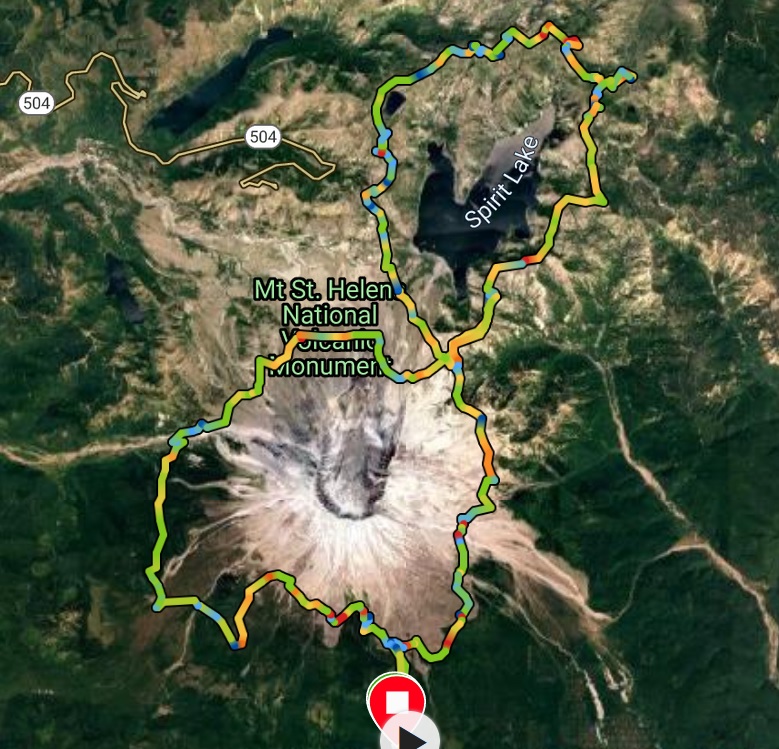
A little info about the race: the 73-mile course is a figure-8 around Mt. St. Helens and the Mount Margaret Backcountry. The lower loop of the figure-8 circumnavigates Mt. St. Helens; the upper loop circles Spirit Lake. It’s this figure-8 structure that makes the race so spectacular, as you get to see Mt. St. Helens and Spirit Lake from every angle and from various elevations.

My GPX of the course
Course profile

Going in, we didn’t expect the course profile to be that challenging. The race has 14,410 feet of elevation gain, which is comparable to Canyons 100K and Castle Peak 100K. Since the Bigfoot gain is distributed over 73 miles, this implies a gentler course. What these overall numbers didn’t convey, however, was how technical the course would prove and how slow even some flat stretches could be.

At 5:30am, we were off. It was clear from the start that the last three days hadn’t done much for my legs: they still felt dead. So I started slowly…very slowly. I watched Megan vanish into the distance and wondered if I’d see her again. I suspected not: she was both well-trained and well-rested, and seemed likely to finish well ahead of me. I was fine with that, although I hoped I wouldn’t make her wait too long after the race. It occurred to me that I should have given her the car keys so she could get into the car when she finished.

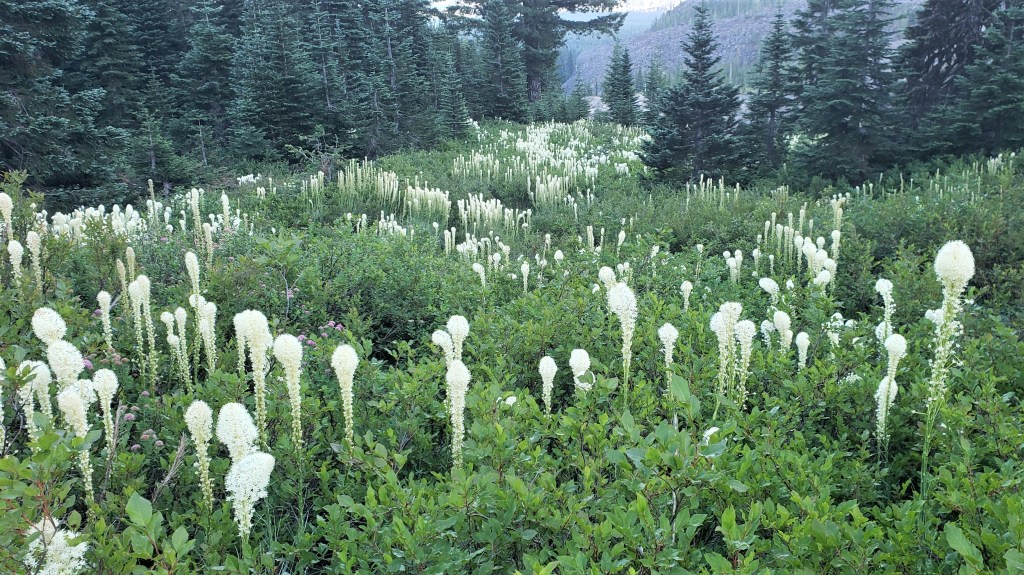
The first two miles were pretty pedestrian: a long gradual ascent through pine forest. After a few miles the course began to open up, and we got our first views. The sun rose above the surrounding mountains, and the trail was flanked by otherworldly white flowers growing on long stalks. Megan later identified them as bear grass. To me, they looked like something out of Dr. Suess.

A promising start to the day
Bear grass along the trail

The course continued to climb steadily, with over 2,000′ of gain in the first five miles. We then had a few more runnable miles through pine forest before we encountered our first lava field. This was slow going, as there was no trail to speak of, and we were mostly hopping rock to rock. Fine with me: my tired legs appreciated any opportunity to hike.

Approaching the first boulder field
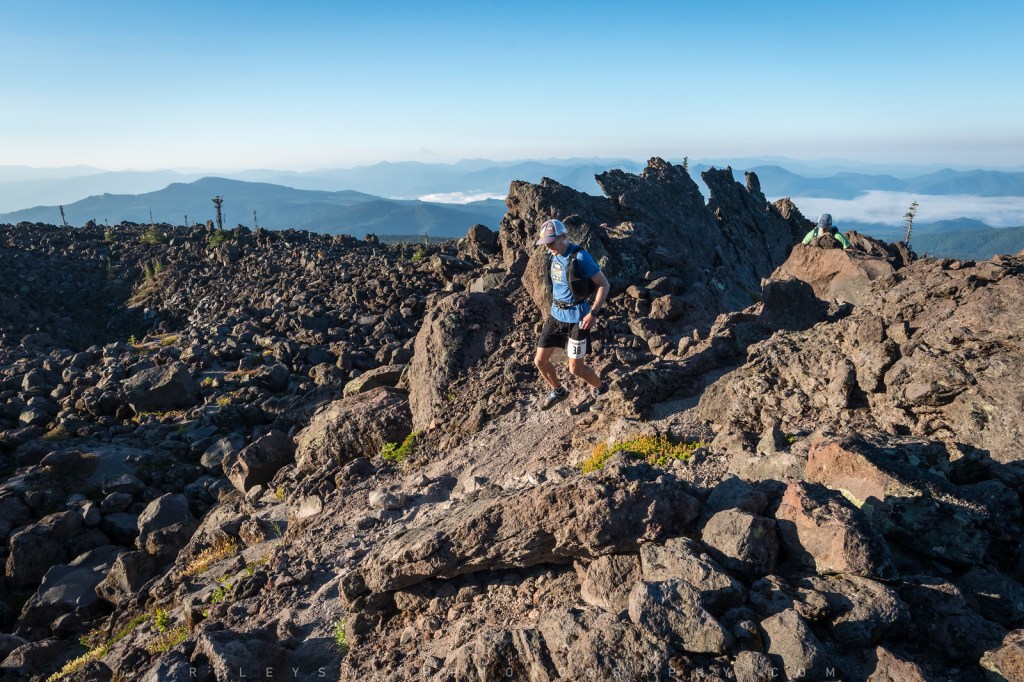
Picking my way through. Photo by Riley Smith Photography

Around ten miles in, I took stock of how I felt. Still tired, but able to maintain this slow pace. Left foot sore, but not getting worse. Probably a decent chance of doing the whole race. I should mention that, at this point, that wasn’t the only option. If things got bad, I could drop down to the 40-mile race, which consisted of the southern loop of the figure-8. I didn’t want to go there, as I’d been looking forward to seeing the whole course. But depending on how things went, I might have to consider it. Fortunately, I wouldn’t have to make that decision until the Windy Ridge aid station at mile 30, so I resolved not to think about it until then.

Twelve miles in, I reached the short out-and-back to the first aid station. I was surprised to pass Megan on her way out: I thought she’d be farther ahead. I reached the aid station, topped up my flasks with water, and continued on my way.

I whiled away the next few miles by doing math in my head. I was starting to feel better about my foot–which wasn’t getting worse–but I still felt tired and slow. If neither condition changed, I figured the worst-case scenario was averaging 4mph for the rest of the race. That would get me to the finish in 18.25 hours, i.e., by 11:45pm. That wasn’t my dream scenario: it meant doing many miles in the dark and possibly making Megan wait for hours. But it was better than dropping down to the 40. I began telling myself I could do this if I just kept it easy and slow.

Around mile 15, the soreness in my foot got worse. This worried me: there were almost 60 miles to go, and I didn’t want to run that far on a bad foot. I started thinking again about dropping down but reminded myself I still had 15 miles to make that decision. A lot could change in that time, so I put the matter out of my head and ran on.

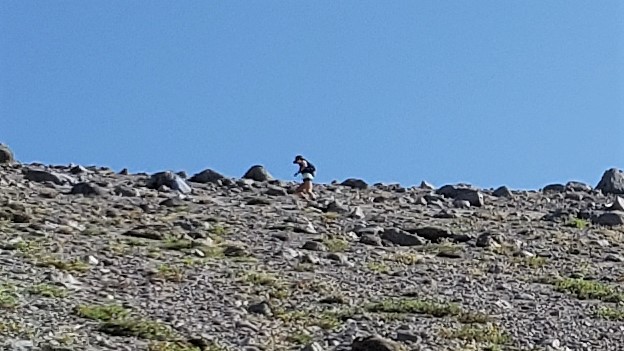
A few miles later, we got our first truly spectacular views. The course ascended up one side of a wide volcanic canyon that afforded great views of Mt. St. Helens and allowed us to see maybe half a mile ahead. I looked for Megan on the trail above me, saw someone who looked like her, and waved. The small figure waved back, then continued running. I was glad she was still in sight: if I could hold this gap, I wouldn’t keep her waiting too long at the end.

One of many great views on this stretch
Megan far above

I passed a guy who’d stopped to take a picture and said “It doesn’t get much better than this, huh?” He agreed. But as I emerged from the canyon, it got better. The dry volcanic dust gave way to green grass and wildflowers, and the trail became gentle and rolling. Running along the canyon rim, I noticed a large cloud of dust below, then heard an unmistakable sound: rockslide! It wasn’t near the course but served as a good reminder to be cautious on the loose volcanic soil.

Rockslide
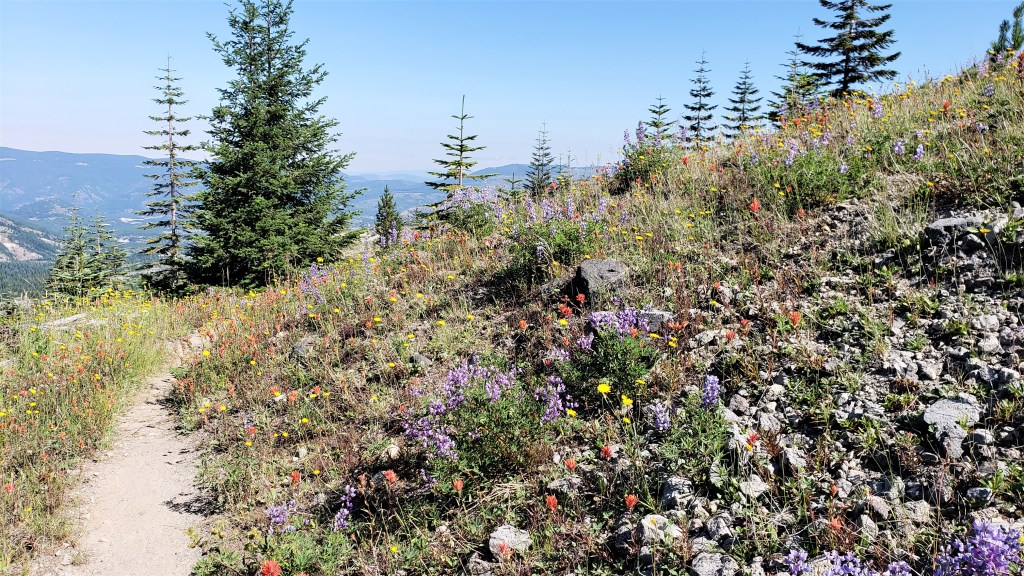
A taste of wildflowers to come

Miles 20-26 (or so) brought a wholly new landscape. We’d seen pine forests, boulder fields and mountain views; now we headed into a flat desert plain with Silver Lake in the distance. Parts of this were very runnable; others were not. There were no big hills to speak of, but the terrain was often rocky enough that running was hard even on level ground. I didn’t mind. I reminded myself to keep it slow and easy and enjoy the race. This was easy to do, as the beautiful surroundings kept my mind in the here and now.

A new phase of the course
View to Silver Lake
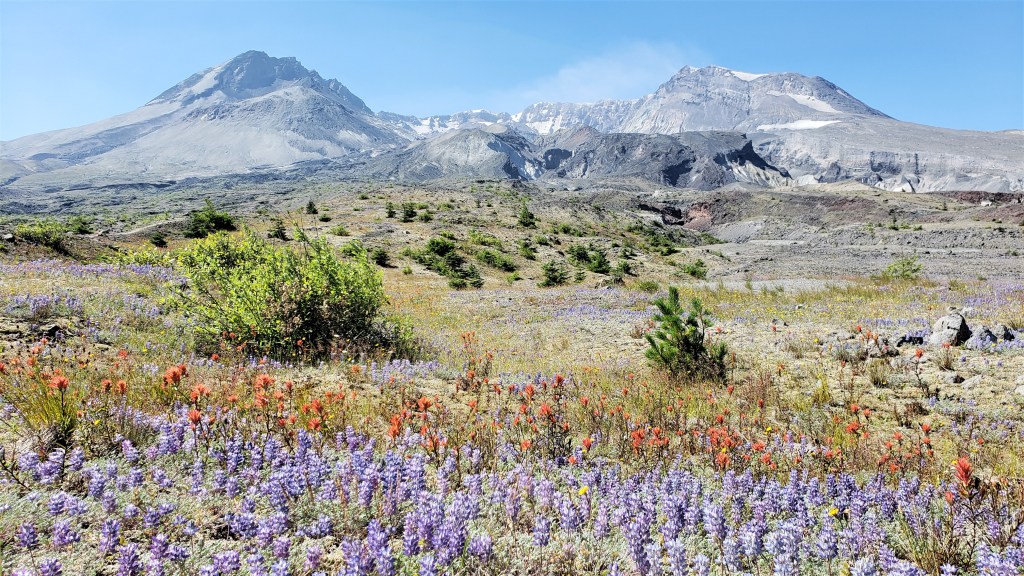
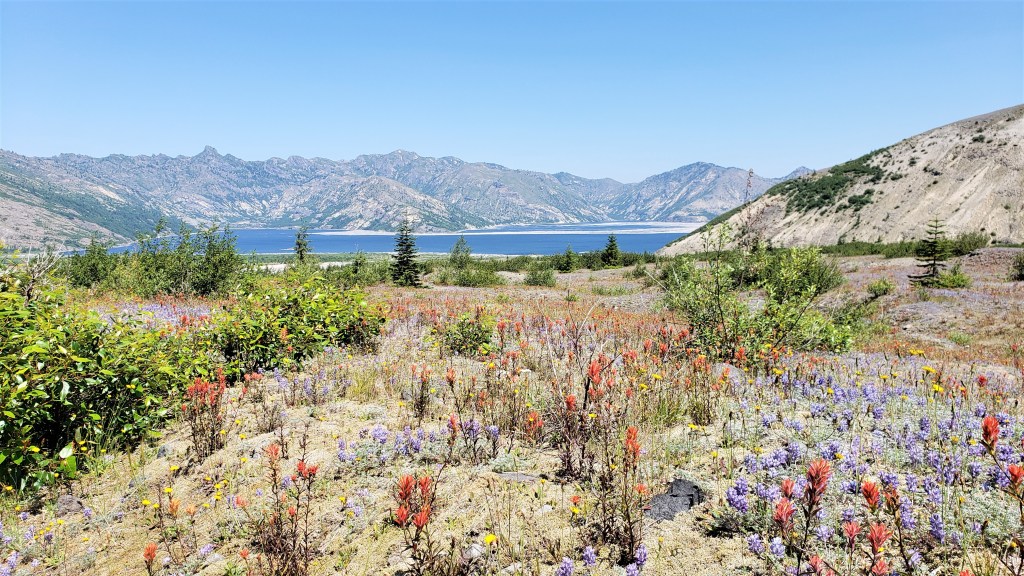
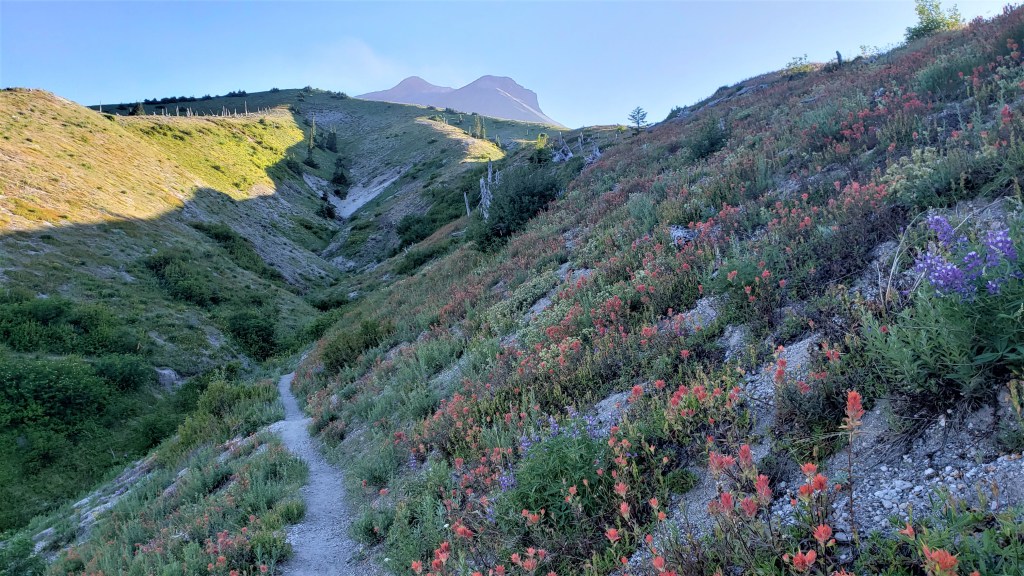
Lupine and paintbrush

Around this time I began to notice two things. First, my foot had stopped hurting. That was a huge relief, more mental than physical. The soreness had never been bad, but the fear that it would keep getting worse kept gnawing at my mind. I now felt confident that the foot was basically fine. Second, I’d been passing people: maybe a dozen over the last ten miles. I wasn’t speeding up, but they were slowing down. I patted myself on the back for pacing well and reminded myself to keep doing what had worked so far.

Feeling optimistic, I reassessed my goals for the race and began repeating them like a mantra. First, finish all 73 miles. Second, finish them in time to get a good night’s sleep. Third, enjoy the race. I probably repeated these words another five hundred times before the end. They seemed realistic: 4mph would accomplish all three, and I was still well ahead of that pace. I also made a mantra of my race strategy: Easy. Keep it easy. Keep on keepin’ it easy. This was of course Caballo Blanco’s first dictum in Born to Run. I wasn’t thinking about this at the time, but credit where credit is due.

The last two miles before Windy Ridge were on a wide dirt fire road. This wasn’t my favorite stretch, although the views were still impressive enough that I took half a dozen pics. Perhaps a mile from the aid station, I passed the first runner on his way back: a guy in an orange shirt. I didn’t know if he was actually the first runner, or just the first I was in time to see. Nor did I care: if there was one thing I wasn’t worrying about today, it was my place. Still, force of habit led me to count the other runners coming up the road. I passed another three or four before reaching the aid station and saw another three or four there. I figured I was in 8th or 9th or 10th place. I was surprised I hadn’t seen Megan yet, as I assumed she’d be on her way before I reached Windy Ridge.

Coming into the aid station, I saw Megan. It was nice to talk to her for the first time since the start. I said I was in for the whole 73: although I felt tired, I wasn’t having any problems that warranted cutting things short.

Megan had been there a while, as there was a lot to check off before heading out. This race has only four aid stations: Blue Lake (mile 12), Windy Ridge (mile 30), Norway (mile 50), and Windy Ridge again (mile 59). The next stretch to Norway was not only the longest–20 miles–but also the most exposed, and at the hottest time of day. Taking a few extra minutes to prepare was the smart thing to do. I refilled my hydration pack’s bladder and retrieved a few things from my drop bag: two large flasks of mango smoothie, a quart bag of boiled potatoes, a smaller bag of dates, and my Sawyer Mini water filter. I also slathered on a second coat of the SPF 100+ sunscreen I’d left in my bag: excessive, maybe, but this was going to be a hot, sun-baked stretch.

I left Windy five or ten minutes after Megan. I did not feel great as I headed back up the fire road. It was hot and I was tired. I looked forward to getting off this fire road and back onto single-track. This happened two miles later, to my relief. The trail slowly arced around the southern edge of Silver Lake, providing more great wildflower views.

The next five miles were tough. No big ascents or descents, but the terrain was rolling and very exposed. I’m not sure if it was the heat, but it felt hard and slow. At times the trail would disappear into dense vegetation, and only the ribbons placed every few feet at eye level signaled that a trail was even there. (Kudos to the RDs and volunteers for marking this stretch and the rest of the course so well.) My confidence faltered a bit, and I started to wonder how long this would take.

I pulled out my boiled potatoes. After my aid station experience at Black Hills, I decided not to count on aid stations any more. (Ironically, the ones at Bigfoot were excellent.) Megan and I had made a big batch of boiled potatoes the night before and packed them in our drop bags. In the past, I’d used larger potatoes and cut them into chunks, but this time we decided to use tiny red, yellow and purple creamer potatoes. That was a good call. Potato chunks can easily disintegrate, especially when smashed around in packs and drop bags. These small uncut potatoes were sturdier and remained intact. I’d coated mine with olive oil and salt, which was also a good call, although I wished I’d used more salt. It was a welcome change from the sweet stuff I’d been consuming, and I ate the entire bag as I ran along.

At some point the course began to climb, and I once again had great views of the surrounding area. More and more of Silver Lake came into view, as did Mt. St. Helens, and I could see what I thought was Rainier–but was actually Mt. Adams–across the lake.

Silver Lake with Mt. Adams in the distance

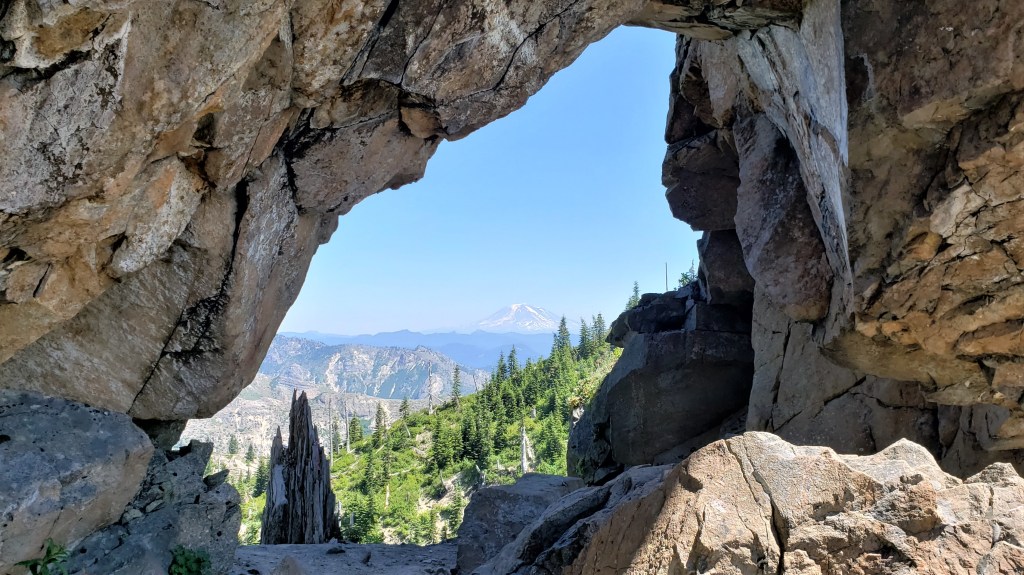
Although I was climbing steadily, I started to feel stronger–better, in fact, than I’d felt all day. It wasn’t so much a second wind as a first. A lot of things came together, I think. I’d passed the halfway point and was glad to be over that hump. I was now committed to doing the whole race and not wasting mental energy wondering if I should. The views gave me a huge lift. I looked up toward the top of the pass and again saw Megan above me. We waved at each other. A little while later I reached the top of the pass, where the trail passed through an eye in the rocky ridge.

The next few miles were amazing. We hear a lot these days about “flow states,” in which we become so absorbed in an activity that we forget all else. I felt like I was flowing. The running was easy; the views were great; and I basically forgot this was even a race. Confident now that I’d hit my goals–finish, and finish in time to sleep–I was able to just relax and enjoy the views. I felt grateful to be out here.

That said, it was pretty hot. Although the temperature wasn’t that high–low 80s–the trail was completely exposed, and the sun was relentless. By now I’d begun to pass the occasional snowfield, so I started scooping up snow and putting it in my hat to cool my head. That felt good. I wished I could get the snow to melt down the back of my neck rather than into my eyes, but I was pretty happy to have it melting anywhere.

Rounding a bend near mile 40, I suddenly saw Megan by the trail ahead. She’d stopped to filter some water at a snow-fed stream. We greeted each other, and she asked if I wanted to run together for a while. Of course! I filtered some water for myself, and we moved on.

We ran together for the next ten miles, to Norway aid. These were fun miles. We compared notes and agreed that we loved this race. We’d been having similar days: drawing strength from the views, feeling better as the race went on, feeling like this was more an adventure run than a race. We stopped at all the snowfields to put more snow in our hats and shorts.

The last mile before Norway is a steep descent. On our way down, we passed two runners heading up. One was the orange-shirted guy I’d seen leading the pack out of Windy. He looked in bad shape. We encountered no more runners before reaching the aid station. For the first time that day, I started wondering: what place am I in? Thanks to the long out-and-back down to Norway, I knew there weren’t any other runners less than two miles ahead of me. So either someone was even farther ahead than that, or I was in third place. But, whatever. I reminded myself that I had only two goals–finish, and finish in time to sleep–and ran into the aid station.

Norway was a pretty sleepy place: two volunteers and no runners. I grabbed my drop bag and retrieved my two smoothies and another bag of potatoes. I began putting my empty flasks into the drop bag, then remembered what Megan and I had discussed as we ran. We realized that getting our drop bags back after the race might be more trouble than it was worth. The race finish was over 30 minutes from our Airbnb, so we’d have to kill over an hour tomorrow just driving out there to get the bags. That seemed unappealing, so we decided to leave anything disposable in the drop bags (Clif bars, Gatorade packets, sunscreen, GUs, etc.) and to carry with us anything we wanted to keep. A fine plan in principle, but our packs were getting pretty full. In addition to all the mandatory gear, I was now stuffing mine with empty flasks and extra pairs of socks.

I was ready to leave before Megan, but I’d planned to wait so we could continue to run together. However, Norway’s biting flies changed my mind. They were nasty little things, and the longer I stayed there, the more they swarmed around and bit me. I told Megan “I gotta get out of here.” She told me to go ahead; she’d catch up. I figured she would, as she’d been the stronger runner all day.

The climb out of Norway was long and hot. The course occasionally went through overgrown and humid sections, as well as a few steep and technical ravines. I was glad when it once again reached an open hillside with views and a runnable trail. I thought again about my place and again admonished myself not to. Two goals: finish, and finish in time to sleep. But just then, I saw another runner on the trail ahead of me: the orange-shirted guy again. He seemed to be hiking full-time now; I caught up to him quickly and passed. I now knew of only one runner ahead of me, although there could have been more.

After another long descent, the trail spat us out onto a wide paved road. I checked my Gaia map and verified that the next two miles would be paved. I ordinarily hate running on pavement during trail races–or in general, for that matter. However, after all the technical and overgrown stretches I’d just gone through, I welcomed the chance to jog along a paved road. Even one that went relentlessly uphill, as this one did.

Two miles later, I’d had enough of road and was glad to get back on single-track. The trail briefly ascended through dense trees, then opened up shortly before Windy aid at mile 59. The course was now above Silver Lake again, which shimmered in the evening sun. A cool breeze blew off the lake. This was also an uplifting stretch to run.

Approaching Windy 2. Photo by Riley Smith Photography
Megan in pursuit. Photo by Riley Smith Photography

I spent very little time at Windy 2: just enough to grab my last two smoothies and the used flasks I’d stashed there earlier. My pack was getting really full. I thanked the volunteers and left. I wondered if Megan would catch up to me, but I was starting to doubt it, as I’d been moving well since Norway.

As I left the aid station, I noticed that I was starting to see 40-mile runners: some still heading toward the aid station, others leaving it behind. That made sense: since the 40-mile is a subset of the 73-mile, the first and last 20 of both races are the same. Most of the 40-milers were walking, which also made sense: if you were still at the 30-mile mark more than twelve hours into the race, you probably weren’t running.

Two miles out of Windy, the course left the fire road and took a single-track up a ridge. This was also a beautiful stretch. Someone had rigged up “steps” in the really steep parts, consisting of two cables and wooden slats. These were helpful–much better than trying to hike the loose volcanic soil. Reaching the top, I found spectacular views of the mountain’s old lava flows and the surrounding plain. It felt exhilarating, and I exclaimed “This is so awesome!” aloud.

Old lava flows

The next few miles were a blast. The trail was rolling for a while, and flanked by more beautiful wildflowers. I passed a few 40-milers. With only tennish miles to go, this felt like the home stretch, and I was tempted to push it a bit. But, I reminded myself I’d gotten this far by taking it easy, and that’s what I mostly continued to do. The rolling trail gave way to an extended flat stretch, where I managed an 8:30 mile–my fastest that day. Looking at my watch, I began to think I could break sixteen hours. All I had to do was average 12-minute miles for the rest of the race, and that seemed realistic right now.

More paintbrush
Fastest stretch of the course
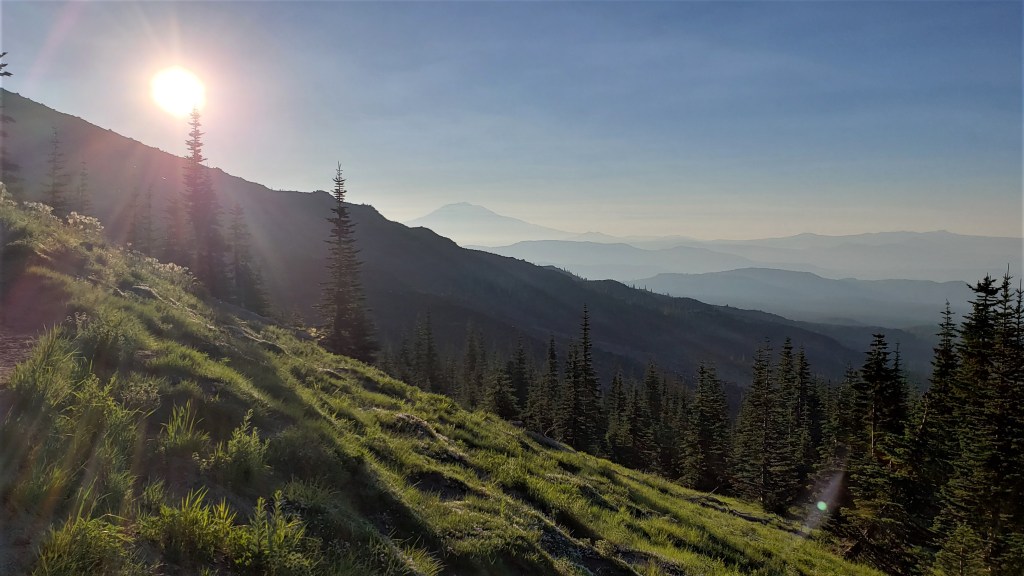
Goodbye, sun

The fast miles didn’t last. The trail become rockier and took us across several steep volcanic ravines. There was nothing tricky about these, but I was surprised at how close the trail often ran to the crumbly looking edge. A fall here wouldn’t kill you, but it could definitely mess you up. I hiked down one side and up the other, thinking that maybe I wouldn’t break 16:00 after all.

First ravine, looking downhill
First ravine, looking uphill

Soon after the ravines, the trail became more runnable and also more green. The bear grass here was spectacular, covering the hillsides as far as the eye could see. I was making good time now and again toyed with the idea of breaking 16:00.

I soon abandoned those thoughts once and for all. The course led to another boulder field. I’m not sure if it was harder than the first one, but it sure felt like it. My balance was not what it had been, and I felt strangely incompetent hopping from misshapen rock to rock. The course ribbons were hard to follow here, so I relied on my GPX to stay on course. At least I wasn’t the only one moving slowly: I passed many 40-milers here. One asked if I’d heard the bear. “Bear?” I asked, just as we heard a roar from the woods below. “That bear,” she said.

At least I’d be through this boulder field before dark. I thought of all the runners who’d be doing it in the dark and wondered if Megan would be one of them. I had no idea how far behind me she was: five, ten, twenty minutes? For her sake, I hoped not far. Navigating these boulders in the dark wouldn’t be fun.

I was relieved to finish the boulder field and return to the trail. Things didn’t get much faster, however, as the trail remained so rocky that running was mostly out of the question. I picked my way down and finally left the rocks for the woods.

When I entered the woods, my world suddenly got very dark. I turned on my LightBelt and kept running, past the 40-milers who now seemed to be everywhere. I was now in the home stretch: just a few miles of runnable downhill through the woods. There were no real challenges here, except that I had a hard time seeing the course markers. The ribbons were hung at eye level, above my light belt beam. There weren’t many wrong turns to take, but I consulted my GPX frequently just in case. At one point, maybe a mile from the finish, my Gaia map told me I’d gone off course. According to the GPX, I’d missed a turn maybe a quarter-mile back. I ran back up the hill to the alleged intersection and found…nothing. The trail I was “supposed” to take didn’t even exist, so I ran back down the way I’d come and eventually found some course markers. This was my only navigation failure of the day, and while it hadn’t cost me much time–maybe seven or eight minutes–I felt annoyed to have gotten confused on the most straightforward part of the course.

Five minutes later, I was done. I hadn’t broken sixteen hours, but I wasn’t too far off, at 16:25. I finished in third place overall: not bad, considering I’d spent the first 25 miles wondering if I could even finish. All I really cared about, though, was that I’d run all 73 miles and seen most of them in daylight: that was more than enough. I thanked the finish line volunteers for an amazing race. Thirty minutes later, Megan finished in 16:55, the first-place female by nearly two hours.

I took a few things away from this race. First, localized pains sometimes go away. I’d spent a lot of early miles obsessing about my sore foot, mostly because I assume these things just get worse. This kind of catastrophizing is not helpful, so it’s good to know they sometimes get better. Second, the Nth wind is a real thing. I’ve heard a lot about ultrarunners getting their second or third wind, but I mostly haven’t experienced this: for me, fatigue usually leads to worse fatigue. I’d never imagined I could feel so much better at sixty miles than at ten, but now that experience will stick with me. Third, you can only infer so much from an elevation profile. Megan and I both assumed the last miles would be fast, as they were mostly flat or downhill. But some of the flattest parts–the boulder fields–were also the slowest. Finally, sometimes you run your best race when you stop caring about the race. What got me through this race was enjoying the experience, and it’s hard to see how pressuring myself could have been anything but counterproductive. It’s true that, in this case, my tired legs and low expectations helped me to approach this race as a fun run. But it’s probably worth striving for the same mindset even when one has competitive aspirations. Because, in these long races, the biggest competitive boost may come from having a good time.

I realize there’s a lot of redundancy in this post. I’ve used the same adjectives–beautiful, amazing, spectacular–many times. Maybe I need a thesaurus, but this was also how I felt about the course. I don’t know if I’ll do this race again, but I’ll definitely recommend it to anyone looking for a great mountain ultra. In fact, Megan and I could think of only one thing that would make it better, and maybe put it on the ultrarunning map: someone needs to put on a Bigfoot suit and occasionally appear to runners along the course. Not too close, not to all the runners, and maybe not even in every race. Just often enough to get the rumors going and keep them alive.

Black Hills 100M – June 25-26, 2021

Pre-race jaunt around Devil’s Tower

I’ve been running ultras for almost ten years, but this is my first race report. I never thought to write one earlier in part because…well, I never thought of it, but also because I trusted in my ability to remember things. I’ve realized, however, that I do not actually remember things that well, and this limits my ability not just to reminisce but also to learn from experience. So, better late than never. If I find the time, I may go back and write up some previous races before my memories fade entirely. But for now, this seems like a good place to start.

I first learned about the Black Hills 100M when I asked my friend Garret about his 2021 race schedule. The race hadn’t been on my radar, but it seemed like something I might want to do. It fit into my schedule, three weeks before the Vermont 100. I figured a low-pressure 100M would be good preparation for Vermont, although that turned out to be a moot point when Vermont was cancelled (again) due to Covid-19. I’d seen a bit of the area before–driving through the Badlands, Grasslands, and Black Hills–and it seemed worth exploring on foot. I was really into the HBO series Deadwood and thought it would be fun to stay there for the race. Unlike most 100-milers, which start at ungodly hours, Black Hills started at 10:00am, which would allow me to actually sleep the night before a sleepless night on the trails. All good reasons to sign up.

Black Hills would (optimistically) be my first completed 100M in almost four years. My history with 100-milers didn’t augur well. I ran my first–Rio Del Lago–in 2015. Although I trained well for that race, I pulled a hamstring only two weeks before, and that injury ultimately led me to drop out at mile 95. I completed RDL in 2016 and 2017, but I can’t say I felt great either time. In 2018, I trained my ass off for IMTUF (Idaho Mountain Trail Ultra Festival) and went into that race with high hopes. Unfortunately, I sprained my ankle badly only 12 miles in and had to drop at the next aid station. Six weeks later I attempted RDL–mostly to get a Western States qualifier–but found that my ankle was still not healed enough to run 100 miles, so another DNF. In 2020 I drove out to IMTUF again–a rare race opportunity in that pandemic year–but by race day, the wildfire smoke pouring in from Oregon and Washington was so thick (AQI around 300) that I couldn’t even see the nearby mountains. All-day races in toxic smoke are not my thing, so I packed up and drove home.

This is all to say that I have limited experience with 100-milers, and most of it has not been great. I’ve certainly questioned whether I’m built for this distance. My comparative advantage has always been in shorter, faster races, although I’ve gravitated to longer stuff as I’ve gotten older and slower. The experience of running 100M is, for me, qualitatively different from running, say, 100K. By the end of a 100K, I feel tired. By the end of a 100M, I feel damaged. It’s the difference between fatigue and actual pain. My legs just don’t deal well with those extra 40 miles, and I tend to run the last 20 in constant fear that a muscle or tendon is about to snap. I don’t know why this is. Maybe I haven’t trained well; maybe I’ve paced my races badly; maybe I’m just not built for this distance; maybe it’s because the only 100M I’ve finished (RDL) is relatively flat and runnable. (Paradoxically, flatter courses are harder on the legs because you don’t relieve the repetitive stress of running by hiking the steep, technical parts.) Maybe, as some have pointed out, running 100 miles is supposed to hurt. With more explanations than races, I can’t say why this distance is so hard for me. At the least, Black Hills would give me another data point.

My pre-race training was neither great nor bad. Like a lot of people, I slacked off during the pandemic because there weren’t any races to train for. I only started running seriously again a month before the Canyons 100K (in late April), when I realized I wasn’t prepared to run 100K. Canyons went fine, although my legs definitely felt the effects of my hiatus: they felt more beaten up than usual and took longer to recover. In the intervening two months, I didn’t have time to do the high mileage I would have liked, but I did get in a number of good long runs, including a 45-mile run around Point Reyes on June 8. That run felt good, which gave me a real confidence boost.

Then, two days later, things took a turn for the worse. I drove up to Davis (about an hour away), spent two hours in a dentist’s chair, then drove home and did a kettlebell workout. Maybe I was stiff–from driving, the dentist’s chair, the long runs, not warming up properly, or all of the above–but for whatever reason, my right hamstring started to hurt during the squats and lunges of that workout. I should say that that hamstring is a chronic concern: I pulled it in 2013, again in 2015 (right before RDL), and again in 2019. It’s always there, but I manage it by warming up well and not launching into hard efforts I haven’t trained for. Mostly, it’s fine. It had been fine for some time, but now it was sore only two weeks before Black Hills. It got worse over the next few days, as Megan and I went up to Truckee to do some last training runs in the mountains. After a few days of that, it really felt bad.

I should also say that I never know what to think of these pre-race pains. If you Google “taper crazies,” you’ll find all kinds of posts and podcasts about how your mind messes with you prior to a race. A common theme is that you should ignore the “phantom pains” that inevitably arise around this time. It makes sense: you’ve trained hard for a long time; you’re invested; you really don’t want anything to go wrong. So your mind fixates on every little ache and pain and probably gives them more credence than they deserve. I certainly experience this. I pulled my hamstring (for real) a month before the Castle Peak 100K in 2019, but although I fretted endlessly about the ache throughout that month, the hamstring held up fine during the race. A month later, I had some mild foot pain going into the Ben Nevis Ultra, which morphed into sharp, stabbing pain only a mile into that race. I actually thought about dropping out–I didn’t want to get stuck in the Scottish highlands with a bad foot–but I decided to keep running, and that pain soon went away, never to return. So, I’ve learned to regard pre-race “injuries” with some suspicion, although this never puts my mind wholly at ease. If you’re wondering why I’m recounting all this, it’s because Black Hills provided some valuable new data on this score.

Anyway, this is where I was going into the race. As for the adventure itself: Megan and I flew into Denver on Tuesday, grabbed our rental car, and drove to Cheyenne that evening. Our main observation about Cheyenne–which applies to South Dakota as well–was that we didn’t see a single mask the whole time we were there. Laramie County has one of the lowest vaccination rates, and one of the highest Covid-19 infection rates, in the country. Yet no one anywhere–supermarkets, restaurants, liquor stores, etc.–seemed inclined to mask up. (We visited a liquor store because Wyoming is apparently one of those states where you can’t buy beer in the supermarket.) Megan courageously wore her mask into most of these places, while I abandoned mine for fear of getting dirty looks. Another observation is that this is a pretty meaty part of the country, which is not great for a strict vegetarian and aspirational vegan like me. We ordered veggie burritos for dinner, but learned after getting back to our Airbnb that they were full of meat. After another order and another trip to the Mexican place, we eventually got to bed.

On Wednesday we drove to Deadwood via Devil’s Tower, where we’d planned to do a short run. Coincidentally, we happened to be passing Devil’s Tower at exactly the same time as my brother Ben and his family, who were enroute to Yellowstone. (Even that coincidence only worked out because they needed to stop for a few hours to get their brakes fixed.) We didn’t see them for very long–maybe half an hour before we all went our separate ways–but it was great to see them for the first time in a year. Megan and I then did our run, which was really nice and gave us great views of the Tower from all directions. I was happy to find that my legs felt good.

Later that day, we checked into our Airbnb in Deadwood. Deadwood is an incredibly cheesy and touristy little town, where all the menu items seem to be named after prominent characters (some historical and others less so), and you can see a faux shootout on Main Street every afternoon. Still, it’s a fun place for a short while. We went to dinner at the Nugget Saloon, got some good beer and a Trixie (the only vegetarian pizza on the menu), and heard our first live music in over a year. We then retired to our Airbnb, which was frankly awesome: the whole top floor of an old Victorian.

Downtown Deadwood (or Leadwood, or Deadville, as some would have it)
The Nugget Saloon

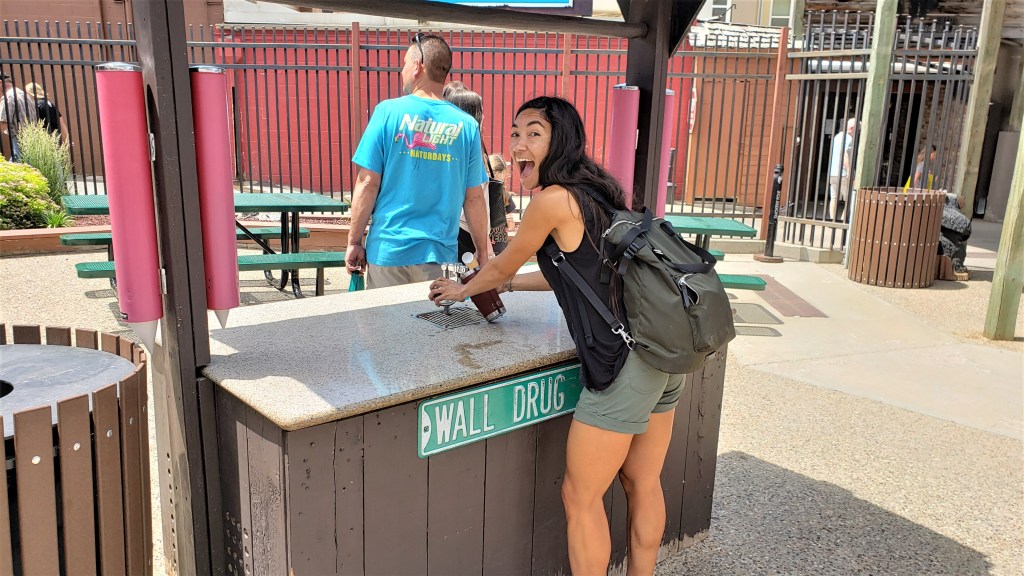
On Thursday we decided to take a scenic drive around the Badlands. On the way, of course, we passed innumerable billboards advertising Wall Drug. If you’re not familiar with Wall Drug…well, you don’t need to be. But it’s unavoidable. I’d resolved not to go there, as we didn’t have a lot of time and I’d been there before. But after passing the 100th or so billboard, we eventually decided to stop so Megan could align her expectations with reality. Also to get the prominently advertised free ice water. Upon parking, I said “Ok, it’s 10:50. We’re back here in ten minutes.” And we were. Just enough time to see some good kitsch and to find the legendary ice water.

The fabled Jackelope
Free ice water!

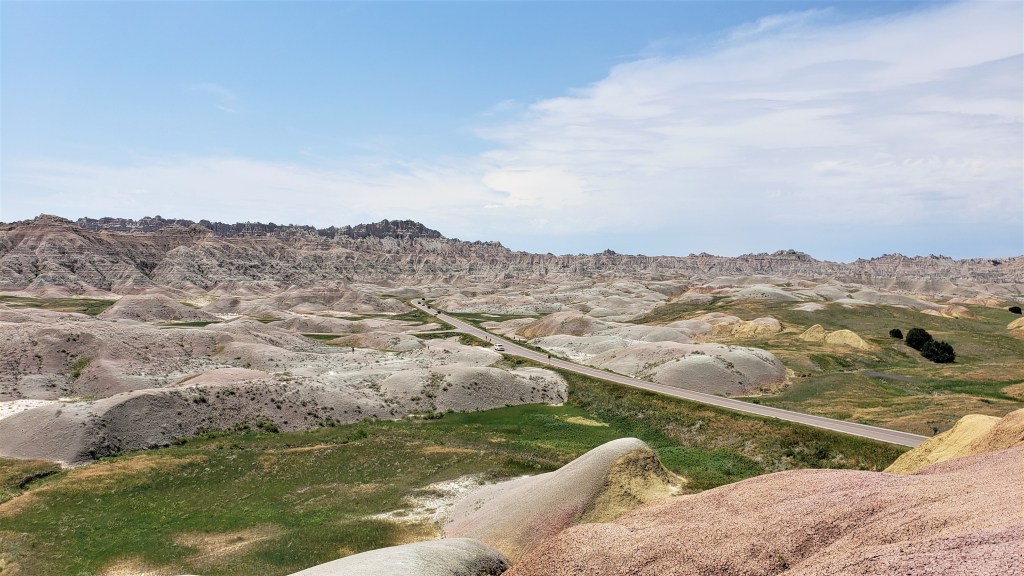
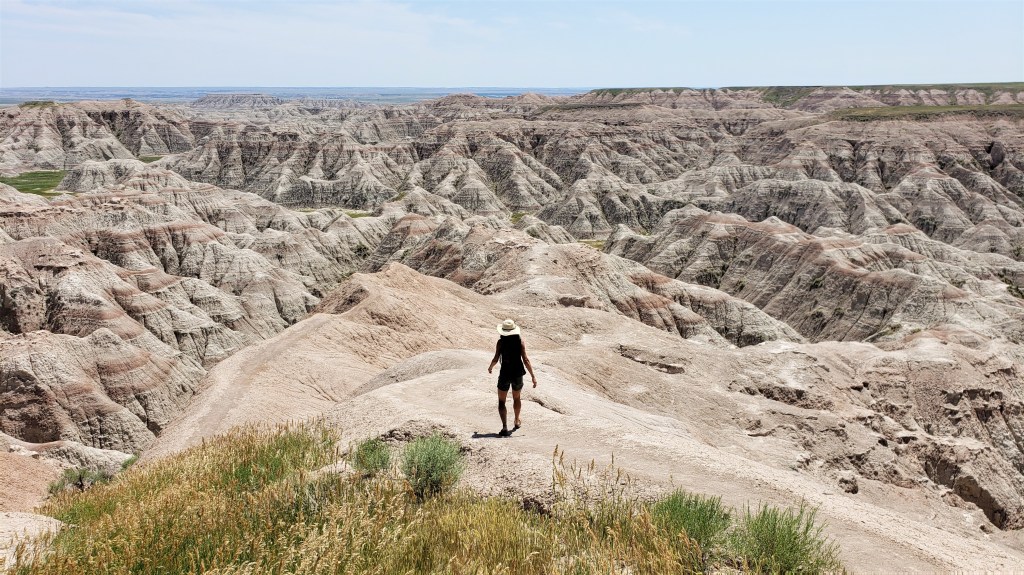
Next stop: the Badlands. I’d been here before, but I’d forgotten how vast and spectacular they are. I’ll let the pictures speak for themselves.

On our way back from the Badlands, we picked up Garret at the Rapid City airport. We drove directly from there to the race check-in at the Sturgis RV Park, where Garret was also camping. It was raining intermittently by now, so Megan and I both volunteered our Airbnb’s sofa bed. Garret declined, and we didn’t push the matter, as we figured everyone has their pre-race rituals that they like to maintain–I certainly do. (That said, we later felt that maybe we should have pushed a little harder, when we got a text from Garret from inside his rainy tent.)

So, the race–this is a race blog, right? I slept unusually well–maybe six hours–the night before, thanks to the race’s late start. That was a huge plus, as it meant that I at least started the race feeling fresh. I was driving myself to the start in Sturgis and leaving Megan behind, so we reviewed our pacing plans. The plan was for Megan to start pacing me in Nemo, mile 67 of the race. The catch: how the hell do you get to Nemo? Megan couldn’t drive me to the start and take the car to Nemo, as we’d then be without car at the end of the race. If I dropped Megan off there before the race, she’d be sitting around in Nemo all day (and much of the night). Fortunately, Black Hills Grab-A-Cab was willing to take Megan there for a reasonable fee, so problem solved. We debated exactly when she should arrive there and settled on 9:30pm: that would leave plenty of cushion even if I somehow managed 11-minute miles. That seemed unlikely but not impossible, as Black Hills is a pretty runnable course with only 16,000 feet of elevation gain.

After arriving in Sturgis, I chatted with Garret for a bit, and then we were off. I had only one real strategy: make sure it never feels hard. If it does, back off. I always start races slowly these days, as my old legs need a lot of warmup. I’ll often pick up the pace after the first few miles, but I wasn’t worried about that. I just wanted it to feel easy, whatever that meant.

The first mile or so of the race was on a paved bike path, after which we joined the Centennial Trail. The race is an out-and-back: 52.5 miles to Silver City, then back to Sturgis, almost all on the Centennial Trail. So, it’s 105 miles rather than 100, but who’s counting? (As it turns out, me, especially later in the race.) I don’t have much to say about the early miles except that they felt easy. I stayed well back in the pack and sometimes felt a little frustrated when I got stuck behind people who were going too slow. However, I figured this was probably a good thing, as it forced me to save my legs for later.

The out-and-back course
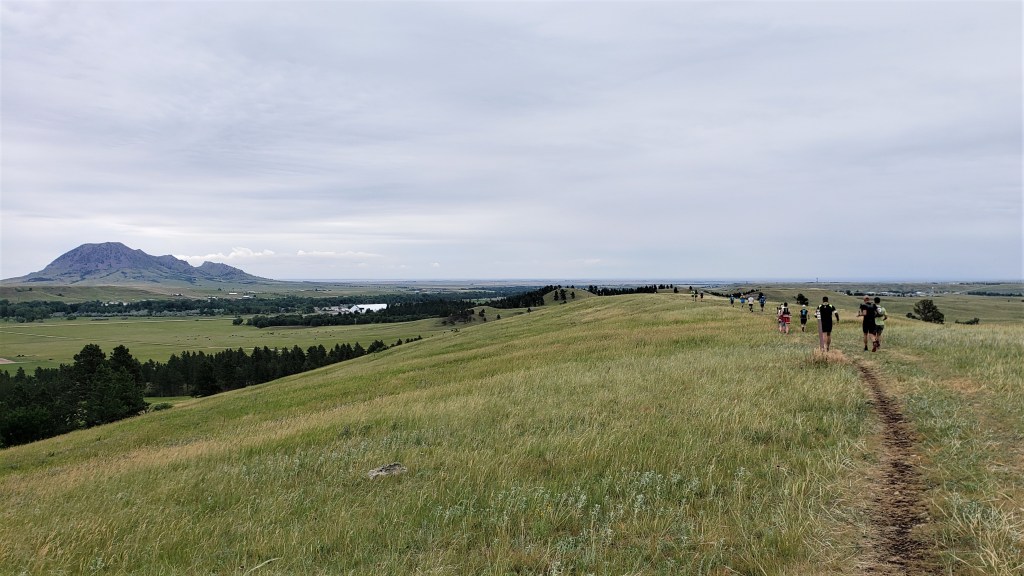
Bear Butte

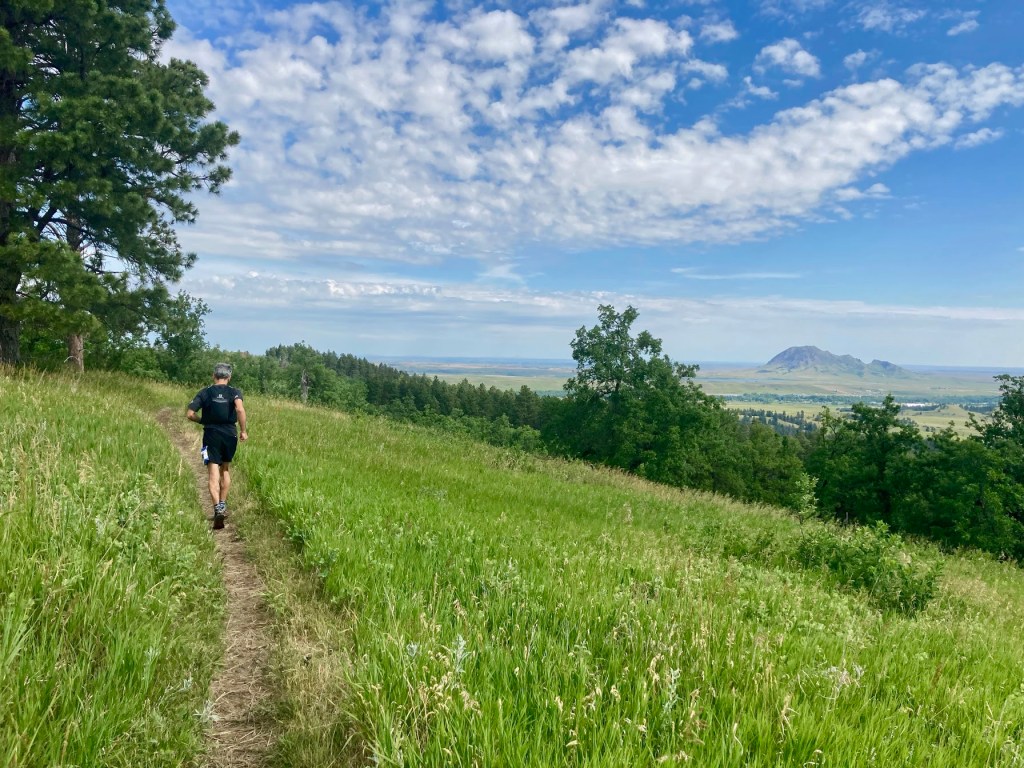
The landscape opened up shortly before the first aid station at Alkali Creek, and we got some nice views of Bear Butte. I didn’t stop at this aid station, or the next, as I planned to keep running to my first drop bag at mile 17.5 (Elk Creek). I caught up with Garret around mile 14 and ran with him to Elk Creek, where I grabbed the smoothie flasks I had stashed in my bag. I didn’t see Garret leave, but he must have left before me, as I caught up with him and several other runners around mile 24. By this time the scenery had changed: the single-track trail resembled a green tunnel that reminded me of the Appalachian Trail. Lots of trees, lots of poison ivy, some nice wildflowers, not a lot of views. It was pleasant enough, and I enjoyed running through the rolling terrain. I felt like I was running well: the pace felt easy, and my legs felt light and relaxed. I recall saying to Garret that the pace felt good and that I hoped to maintain it for the whole race. That statement would prove hopelessly naive, but hey, you need some optimism to do these things in the first place. We climbed gently for a while, then emerged onto a ridgeline that offered some nice views.

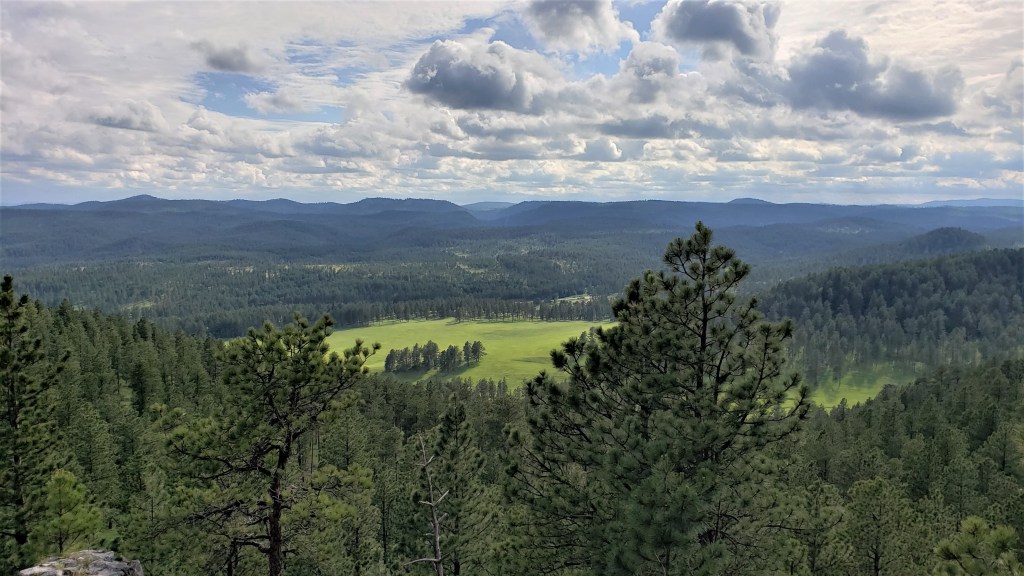
View from the course

Somewhere along this ridgeline I decided to speed up a little and left the group behind. This wasn’t a goal, but I wanted to run at a pace that felt natural, and I was inclined to go slightly faster on the downhills than the others. This was fun until the single-track trail became a wide ATV trail. Then it became less fun. The ATV section started maybe five miles before Nemo (mile 38) and continued until Pilot Knob (mile 45). Pretty much all of those miles sucked, especially the stretch between Nemo and Pilot Knob. The trail / fire road had been totally chewed up by ATV wheels, leaving ruts and muddy puddles everywhere to dodge. There were rocks all over the place, some of which were loose and some of which were firmly embedded in the ground–as I learned when I stubbed my toe on the latter several times. I hated this part of the course. The only relief from the ATV trail was a brief paved section in Nemo, where I texted Megan “Nemo 1!” Despite the exclamation point, I wasn’t feeling excited by now. I was starting to feel tired, only 38 miles in. The ATV track had left me feeling grouchy. I was a little behind 12-minute pace, which meant that, even if I maintained it, Megan would be waiting a while in Nemo. I doubted I could maintain it. If Megan had been driving herself, I would have told her to arrive in Nemo later–10:30 at the earliest, but probably later than that. However, we’d already made arrangements with the cab company, so I said nothing and just hoped for the best.

The seven miles from Nemo to Pilot Knob sucked. I guess I already said that, but they really did. So, I was glad to get to Pilot Knob, where I knew the single-track would resume. I wanted salt, so I grabbed a big handful of potato chips at the aid station and continued on my way.

What followed were 7.5 miles of pretty single-track. The change of scenery lifted my spirits almost immediately and lessened the fatigue I’d been feeling for miles. As any ultrarunner will tell you, these races have a large mental component, and it’s amazing how physically irrelevant factors–the scenery, the prospect of seeing your pacer, actually seeing your pacer, etc.–can turn your race around. I don’t know that my race turned around, but I was feeling better than I had for miles. It was getting late, but I still hoped to reach the turnaround before dark, so I pressed on at what seemed like a solid but sustainable pace.

The only thing that bothered me at this point was the person I came to know as “trekking pole guy.” I don’t use trekking poles myself, but I have nothing against people who do–except that sometimes those poles can get noisy. For several miles, I’d been hearing the clack-clack-clack of poles not far behind me, and it was getting on my nerves. This actually led me to run faster–maybe faster than I should have–just to escape the noise. I eventually did, but at a cost: I’d broken my Golden Rule of “run your own race.” This is one reason I mostly race alone: I find it hard to run with others without it subtly affecting my pace, whether it’s because I’m stuck behind someone on a downhill or feel pressured to run faster because someone is right on my heels.

The last few miles before the turnaround at Silver City included a long, steep downhill. While descending, I passed the leader coming in the other direction. I figured he was a good five or six miles ahead of me, which is fine, but it reminded me that I’d probably leave Megan waiting for quite a while. I continued down, stopping only to put on my headlamp, which I’d brought in case I failed to reach the turnaround before dark. (My primary light, a LightBelt, was in my drop bag in Silver City.)

About a mile before the turnaround, it started to rain. I’ve had some bad experiences with rain: for example, at the Never Summer 100K in 2019, it started to rain, but I chose not to don my jacket immediately in the hope that the rain would be brief. Big mistake: not only did the rain get harder, but it eventually turned into hail. By that time I was freezing, and because I was then wading slowly along what had become a muddy creek, I couldn’t get warm even with my jacket on. Better to avoid that, I thought, so this time I stopped and put my jacket on. It was the smart thing to do, but this time the rain stopped almost immediately, and my jacket began to feel very hot. So, another stop to take off the jacket and put it back in my pack.

Soon afterwards, I reached the turnaround at Silver City. There was a small hut there with the drop bags and aid station stuff. I was relieved to reach the halfway point, and to take a break while I retrieved my light belt and other gear. I chatted with the friendly aid station volunteer and ate some more chips. It was around now that I started to notice that the aid stations were not all I’d expected. The final pre-race email said that “Aid station fare will be the standard ultramarathon buffet of fruit, chips, candy, cookies, potatoes, meat, pb and j, bread, and some soup for the night hours.” To my mind, the most important items on that list are the potatoes and soup, which I would definitely want during the night. During the warmer daylight hours, I mostly consume sweet stuff: dates, clif bars, smoothies, etc. Later on, and especially as it gets dark, I need more starch and salt. Boiled potatoes are an aid-station staple, and they were mentioned in the email…but so far I hadn’t seen any. Hadn’t asked yet about the soup, but I would soon find out.

As I moved toward the door of the hut, trekking-pole guy asked if I was leaving. I said yes, wondering why he wanted to know. I hoped he wasn’t looking for a running buddy and hastened on my way.

Heading out again felt hard. I felt tired thinking about the big uphill ahead and retracing all of my previous steps. But, that was the only way back, so on I went. Only a mile or so from the turnaround, I passed Garret coming down the hill. He was moving well and seemed in good spirits, so I wondered if he’d overtake me at some point. I figured he was 30-40 minutes behind me, but that’s not much with over 50 miles still to go.

The hill actually wasn’t bad. It was long and steep, but this gave me a much-needed opportunity to hike for a while. Unfortunately, I once again heard trekking-pole guy close behind me, so I picked up my pace to escape the clack-clack-clack. I guess he was also tired, because I soon left the noise behind and never heard it again. I feel bad complaining about this–I’m sure he was a nice guy, and poles are perfectly legitimate trail gear–but my tolerance for many things declines pretty sharply in the second half of a 100M.

On my way up the hill, I decided it was time for self-medication. My left foot had started hurting around mile 50: an unfamiliar pain in the arch that I hadn’t felt before and couldn’t explain. A cramp? I don’t know. It was mild at first but had steadily worsened over the last five or six miles. It still wasn’t terrible, but I knew ibuprofen would take time to kick in, so I figured I should take one now. I also decided it was time for some caffeine. I ate a “coffee collection” Clif bar with 65mg of caffeine.

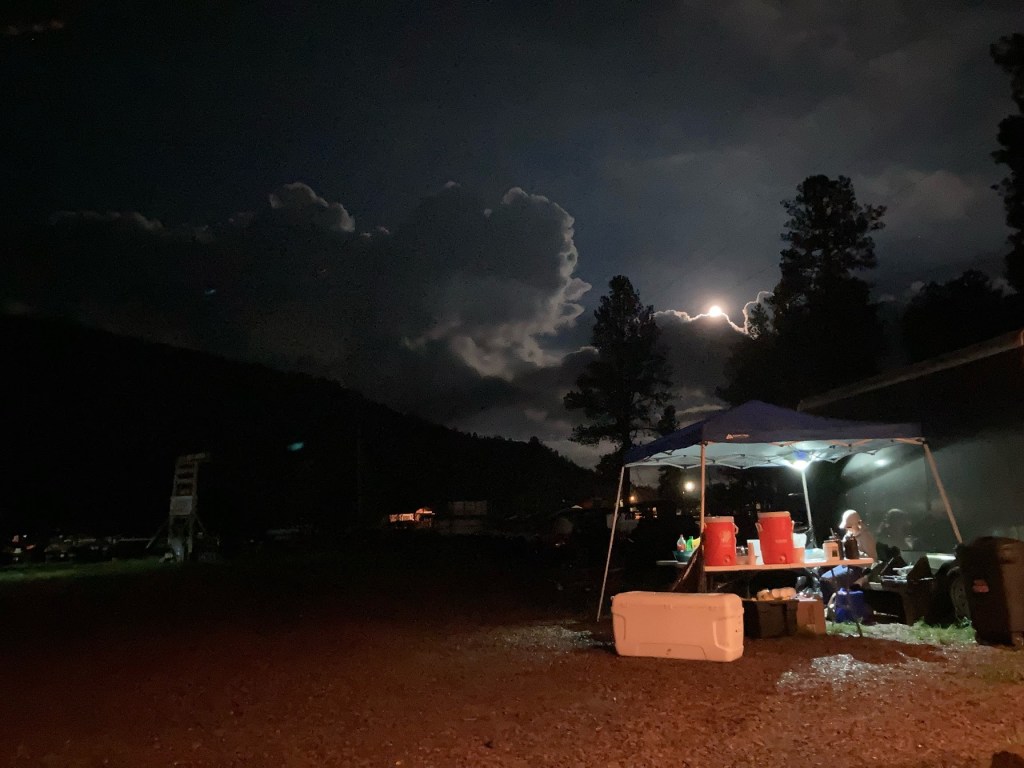
The next five miles to Pilot Knob were great. The caffeine kicked in; the ibuprofen alleviated my foot pain; the hiking had given my legs a break. I ran. I was probably only doing 11-minute miles, but it felt fast, and I was glad to be running again. The moon rose, beautiful and huge. I could probably have taken a good picture if I knew how to use my phone’s camera, but this is what I got:

Moonrise

I reached Pilot Knob feeling good. I asked if they had potatoes. No. Veggie broth? No, just beef ramen or something like that. The aid station volunteers were all very nice, so I hate to say this, but…WTF?? Veggie broth and boiled potatoes aren’t hard, and I was really craving both at that point. Fortunately, they did have some cheese quesadillas, so I grabbed one of those and ate it on my way. I almost immediately regretted not taking more, as that first one went down all too quickly.

The ATV trail to Nemo was as bad as I’d remembered, but worse the second time around. I kept looking at my watch and realized I’d be lucky to reach Nemo before 1:00am. Poor Megan! If she’d gotten there at 9:30 as planned, that would be a long wait. Nothing I could do, though, except keep going.

My foot started hurting badly despite the ibuprofen, so I took another, as well as a caffeinated Gu. The caffeine helped, but the ibuprofen did not. Or at least not as much as I’d hoped. It worried me that I was still 40 miles from the finish and experiencing foot pain that two ibuprofen couldn’t mask. What did that mean? What kind of damage might I be doing to that foot? This was starting to feel like my previous 100M experience: I felt damaged and concerned. Only this time, it was happening with 40 miles to go. I tried to focus on the thought that I’d see Megan soon, which I believed would somehow help.

Reaching the paved road to Nemo was a huge relief. At last, I’d see Megan and have someone to help me through my pain…or at least someone to hear me whine about it. I reached the aid station a little before 1:00am and saw her. It didn’t heal my foot, but it did help. I was glad I wouldn’t have to do the rest of this alone.

Nemo aid station

I still optimistically hoped that Pilot Knob was an anomaly, and that some aid stations would have potatoes and veggie broth. Sadly, Nemo did not. So I filled my reusable rubber cup with pretzels and snacked on those as I walked away with Megan. She had been there for hours and was cold despite her down jacket. This surprised me, as I was in a t-shirt and shorts and felt fine. But of course, I’d been running while she was sitting and waiting for me. I felt bad about that: I don’t think I could or should have run faster, but I probably should have known that I had no chance of arriving there anywhere close to 9:30. Chalk it up to inexperience, I guess.

The next five miles of ATV trail were predictably hard. I don’t remember what Megan and I talked about. I was too tired to talk much, and I imagine most of what I said was whining and swearing interspersed with the occasional guttural cry. Megan has paced me for both 100Ks and 100Ms, and while I think I’m a reasonably pleasant runner in the former*, I know I’m not much fun in the latter. Megan usually joins me in the final stretch, and by that time I’m in my own world of pain, making a lot of unpleasant noises and just trying to get by. I did the only thing I could, which was take another ibuprofen.

*With the exception of Castle Peak 2018–sorry, Dan!

It’s hard to overstate how relieved I was when we finished the ATV stretch and returned to single-track. It was uplifting to ascend once again to the ridgeline, where we got a nice view of the valley under the bright moon. My foot still hurt, but at least I wasn’t dealing with rocks and puddles any more. (Although even the single-track seemed a lot rockier than it had earlier. A lot of things look different at mile 70 than at mile 30.) Despite the foot pain, I’d maintained the ability to run downhill, so I tried to take the downhills as fast as I could. One long downhill stretch brought us to Dalton Lake (mile 74), where, predictably, they had no potatoes or veggie broth. One volunteer said “We have bacon!”

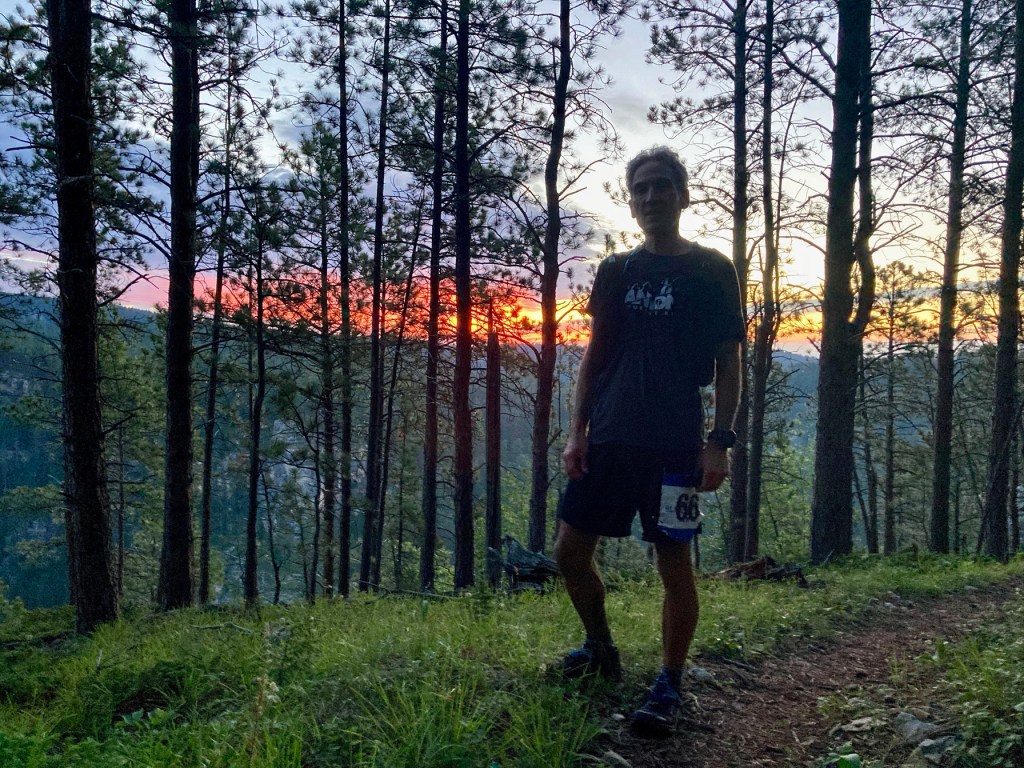
It started getting light really early, maybe 4:00am. By 4:30, it was light enough to turn off my light belt. I’d never run through the night before, except as a pacer: my only other 100M, Rio Del Lago, starts at 5:00am and is runnable enough that I can finish around midnight. I’ve heard a lot about how sunrise lifts your spirits and recharges your batteries. I did not experience this. But then, my problem was less general fatigue than localized foot pain, which the sun did little to dispel. Still, it was nice to see the world around me again.

Sunrise
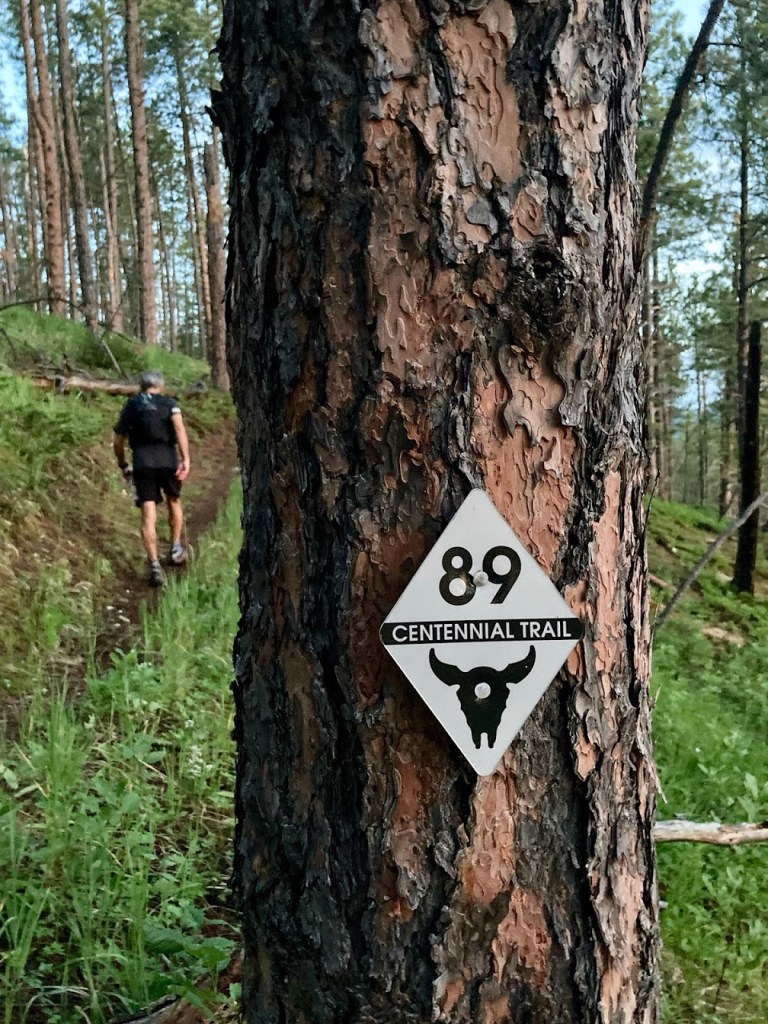
Centennial trail marker
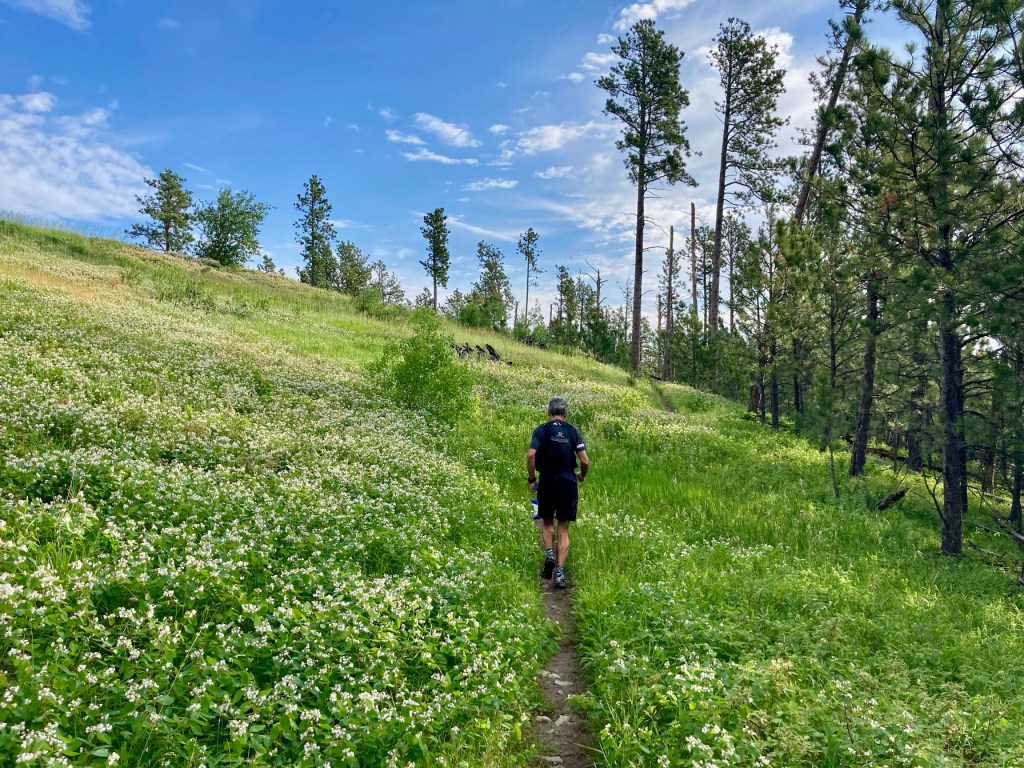
Wildflowers galore

Not much to say about the rest of the race except that it was hard. I still managed to run downhill but found myself walking more and more of the flats as well as the uphills. It got really sunny and warm, and the sight of Bear Butte under bright sunlight pulled me at least partway out of my pain cave. The last miles were really quite lovely, and somehow looked different than I’d remembered. Megan gave me an encouraging “good job” every time I managed a sustained run, which I appreciated. Once we’d passed the 100-mile mark, I did start to get a little resentful about those last five miles. Isn’t 100 miles enough? Why do I need another five? I know, I know: almost no 100M is actually “only” 100 miles long. But as I said, my tolerance for a lot of things goes down.

Bear Butte again

About two miles before the finish, Megan noted that I could break 25 hours if I tried. I’ll admit this had occurred to me as well: most ultrarunners know round numbers are meaningless but simultaneously care about them a great deal. I made a halfhearted effort to push the pace, but I also wasn’t sure it was worth it because we really didn’t know how far we still had to go. Megan urged me on, and when we finally reached the bike path, I managed a pretty decent pace for a little over a mile. I reached what we thought was the 105-mile mark in under 25 hours, but the finish was still not in sight. Then we finally saw it, maybe half a mile away. My response was immediate: I stopped running and walked. I knew Megan was disappointed, but that finishing push was exactly that: the effort one makes when the finish line is in sight. I’d been doing that for over a mile, and I was done. I did manage to jog in the last quarter-mile or so, mostly because there’s something ignominious about slowly walking to to the finish line. Despite my fatigue, I smiled a bit when I saw a large snake on the path to greet me.

Finish line crowd support

I was glad to be done. Megan gave me a hug, and I choked back a few tears. I’m not typically emotional at the end of a race, but this one was really hard. Fatigue, pain and worry about my foot had been building up for hours. I don’t know exactly what I was feeling, but whatever it was wanted to come out as tears. Still, I wasn’t about to cry in South Dakota of all places–I mean, this ain’t California–so I pulled myself together. Megan and I drove back to Deadwood, showered, tried (and in my case, failed) to take a nap, then drove back to Sturgis and had dinner with Garret: Impossible burgers for all. Garret stayed at our place in Deadwood that night, so we were all able to have a post-race beer at a local brewery before calling it a day.

My time of 25:03 was…fine? Having run so few 100Ms, and only one race in the last year and a half, I didn’t know what to expect. It was harder than I’d expected: despite running as easily as I could early on, it still got hard. But maybe that’s just how 100Ms are. My splits didn’t seem bad–11.5 hours for the first half, 13.5 hours for the second–although I still feel like better pacing should permit even splits. Mostly, I felt grateful to be done, and glad to have another hundo under my belt. I suspect a lot of my difficulties simply reflect my lack of 100M experience. My hope is that every race will help my legs handle this distance: that’s what happened with 50Ms and 100Ks. I’m doing Ultra Trails Lake Tahoe in the fall, so we’ll see.

I took two things away from this race, both of which only became clear in the following days. First, I really should learn to disregard pre-race pains. My hamstring, which worried me so much over the previous two weeks, didn’t bother me at all during the race. Moreover, even the soreness I’d felt vanished completely once the race was done. I’m pretty sure running 105 miles didn’t magically heal that hamstring, so I’m left to conclude that most of that pre-race soreness was just mental bullshit. This is what I’d already been telling myself, but this race reinforced that belief. Second, I need to stop being so afraid of in-race pains. I was really worried about my foot: it genuinely hurt, and running 40 miles on a hurt foot while managing the pain with ibuprofen seems…unwise? Maybe it is. But it felt fine later that day and continues to feel fine. Some mild soreness persisted for a couple weeks, but nothing that justified my worst fears of torn muscles and tendons. So it seems that sometimes pain is just pain. Remembering this could make my races a lot easier, since the pain itself usually bothers me less than the fear of what it might portend.

Next stop: Bigfoot 73 in two weeks!